Solomon's Surprise: A Heart for Every Nation
Discovering God’s global heart in Solomon’s temple prayer.

1 Kings 8:43 Hear thou in heaven thy dwelling place, and do according to all that the stranger calleth to thee for: that all people of the earth may know thy name, to fear thee, as do thy people Israel; and that they may know that this house, which I have builded, is called by thy name.
When Solomon dedicated the temple in Jerusalem, he did something that would have shocked most of his contemporaries. As W. Austin Gardner often reminds leaders, God’s heart has always been bigger than our circles. Solomon prayed for strangers. He prayed for foreigners. He prayed for people who didn't look like him, talk like him, or worship like him.
He asked God to answer their prayers, too.
That's not what you'd expect from an Old Testament king. But Solomon understood something that took the rest of Israel centuries to figure out: God's heart was always bigger than one nation.
The Temple Wasn't Supposed to Be Exclusive
Most people think of the Old Testament as "Jews only." But that's not what Solomon saw when he looked at the temple. He saw a place where people from every corner of the earth could call on the name of the God of heaven.
"That all people of the earth may know thy name."
Not just Israel. Not just the chosen people. All people.
Solomon didn't see the temple as a country club with a membership card. He saw it as a lighthouse. A beacon. A place where anyone, Jew or stranger, could find the living God.
This wasn't a new idea. God told Abraham way back in Genesis that through his seed, all the nations of the earth would be blessed. Solomon was just reminding God and reminding Israel that the promise was still in play.
The stranger wasn't an afterthought. The stranger was always part of the plan.
Solomon Was Concerned About World Evangelism
Here's what gets me: Solomon lived 3,000 years ago, and he was more concerned about reaching the nations than most churches are today.
He wanted the world to be able to call on God. He didn't want the temple to be a place where only Jews could pray. He asked God to hear the stranger's prayer.
That's world evangelism. That's missions. That's a heart that looks beyond borders and bloodlines and sees people who need to know the name of the Lord.
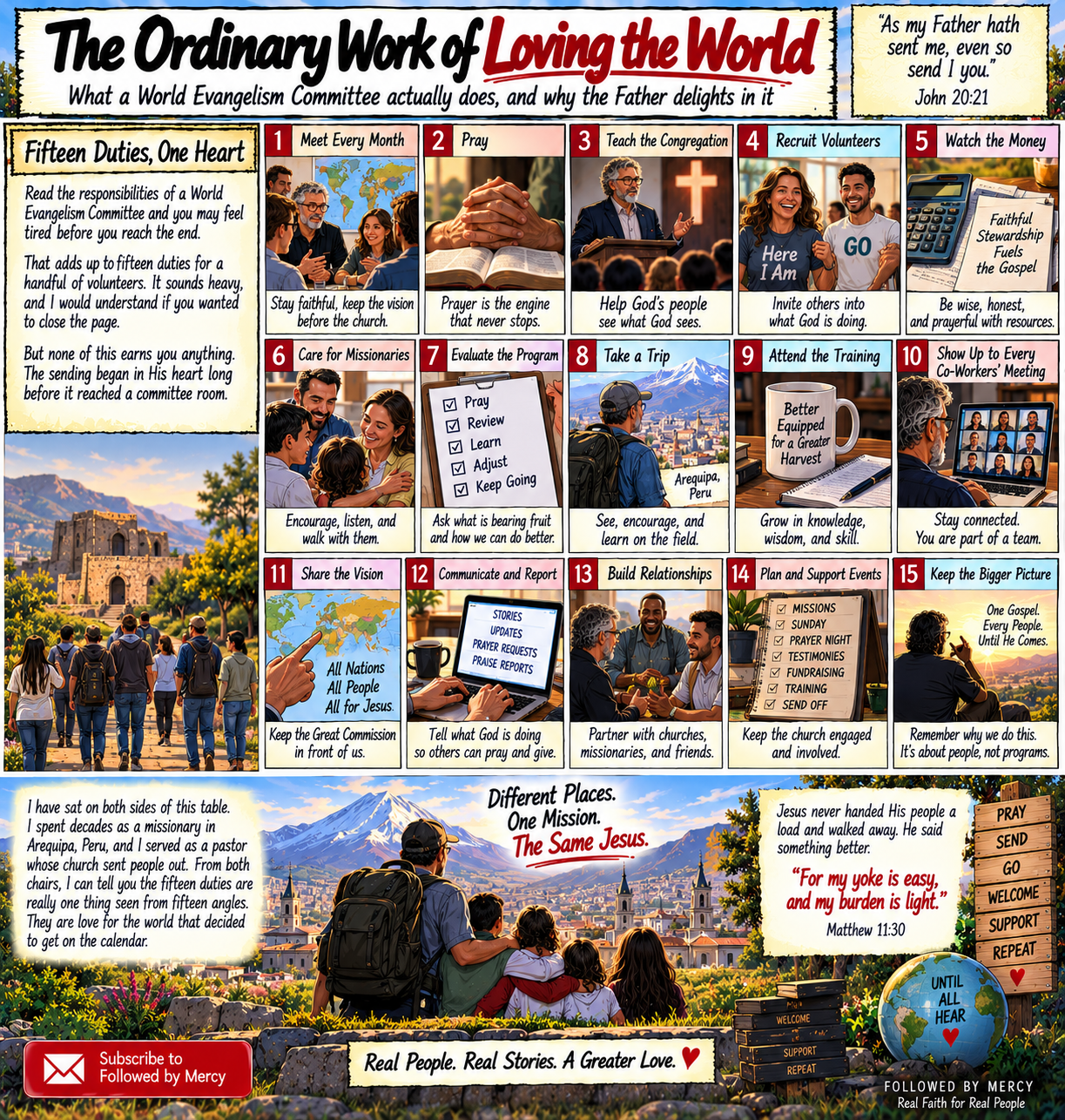
I spent 20 years in Peru as a missionary. I've seen what happens when the gospel crosses borders. I've watched Peruvian pastors pray with the same power as American preachers. I've seen God answer prayers in Spanish just as fast as He answers them in English.
God doesn't have favorites. He has a family. And the family was always supposed to include everyone.
The Wisdom That Drew the Nations
Solomon's wisdom wasn't just for Israel. The Bible says kings from all nations sent ambassadors to listen to his counsel. People traveled from far and near to hear him speak. His reputation extended well beyond Israel's borders.
God gave Solomon wisdom and understanding beyond measure: "like the sand on the seashore." His wisdom surpassed the wisdom of Egypt and the wisdom of the East. He composed 3,000 proverbs and 1,005 songs. He knew about plants, animals, birds, reptiles, and fish.
But here's the thing: Solomon's wisdom wasn't meant to make Israel look good. It was meant to make God look good. It was meant to draw the nations to the God of Israel.
When people came to Solomon's court, they weren't just impressed by his intellect. They were
encountering the God who gave him that intellect. They were seeing what happens when a nation walks in covenant with the living God.
That's the point of blessing. That's the point of wisdom. That's the point of prosperity. Not so we can hoard it, but so we can point others to the source.
What This Means for Us
If Solomon, an Old Testament king under the law, was concerned about the stranger, how much more should we be?
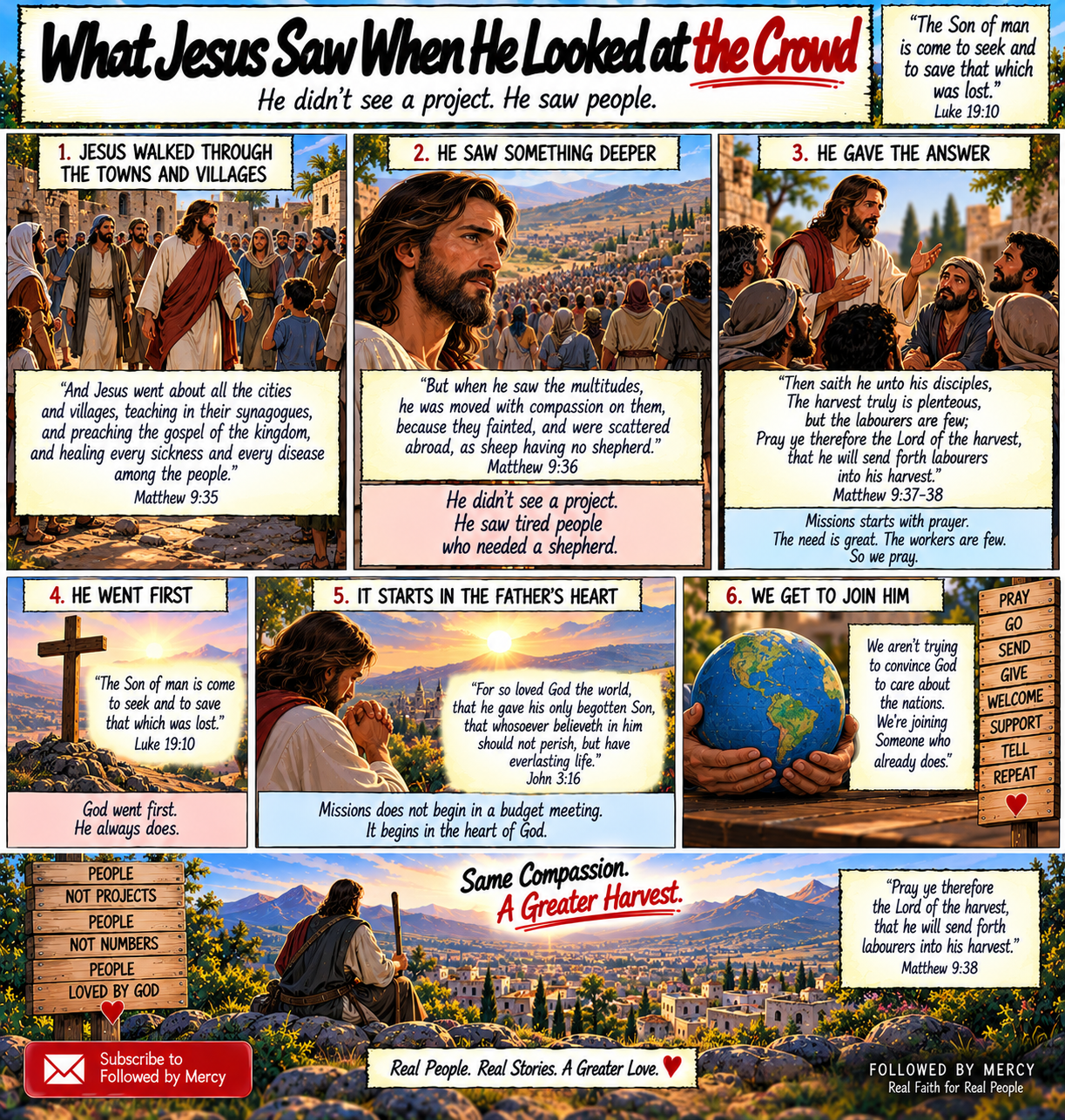
We live on the other side of the cross. We've seen the fullness of God's mercy in Jesus. We know that the gospel is for every tribe, tongue, and nation. We know that Jesus told us to go into all the world.
And yet, we still act like the gospel is ours to keep.
We build our little church fortresses. We stay comfortable in our own communities. We give to missions once a year and call it good. We don't pray for the stranger. We don't ask God to bring the nations to know His name.
Solomon would be embarrassed.
Here's the question: How concerned are you that all people be able to call on His name?
Not just the people in your pew. Not just the people who look like you or vote like you. All people.
The world is full of strangers who need to know the God of heaven. They need to know His name. They need to know He hears them. They need to know the house of God is open to them.
Are you praying for them? Are you giving for them? Are you going to them?
Or are you treating the gospel like it's your private club?
The Heart Behind the Prayer
When I read Solomon's prayer, I see a man who understood grace before grace was fully revealed. He understood that God's mercy was never meant to stop at Israel's borders.
Mercy follows us. All of us. Jew and Gentile. Insider and outsider. The religious and the rebel.
That's the message of The Big Leap of Faith: God's love was never limited to one group. It was always meant to reach every nation. It was always meant to be big enough for the stranger.
If you've ever felt like an outsider, Solomon's prayer is for you. If you've ever wondered if God hears people like you, Solomon's prayer is for you.
God hears the stranger. He always has.
A Call to Action
Ready to Go Deeper? Explore Books by W. Austin Gardner
If this stirred something in you, don’t let it fade. Keep walking with the Lord, and let faith grow feet through stories of forgiveness, healing, and restoration.
Browse W. Austin Gardner’s books here: https://amazon.com/author/austin-gardner
Solomon's heart should challenge us. It should convict us. It should move us to action.
Pray for the nations. Ask God to bring people from every corner of the earth to know His name. Pray for the stranger. Pray for the immigrant. Pray for the refugee. Pray for the person who doesn't look like you.
Give to missions. Support the work of people who are taking the gospel across borders. Don't just give once a year. Make it a lifestyle. Make it a priority.
Go. Maybe God is calling you to go yourself. Maybe it's short-term. Maybe it's long-term. Maybe it's across the ocean or across the street. But go. Don't let the gospel stay in your comfortable little corner.
The world is waiting. The stranger is waiting. And God is still listening to the prayers of those who will ask Him to make His name known to all people of the earth.
You can learn more and stay connected at waustingardner.com, or listen to the Followed by Mercy podcast, where we talk about God's relentless grace for every person, every nation, every heart.
FAQ
Did Solomon really care about non-Jews?
Yes. His prayer at the temple dedication specifically asked God to hear the prayers of strangers:
foreigners who came to the temple. Solomon wanted all nations to know God's name, not just Israel.
What does this mean for missions today?
It means we should have the same heart Solomon had. We should pray for the nations, give to the work of missions, and be willing to go where God sends us. The gospel was never meant to be hoarded: it was meant to be shared.
How can I develop a heart for the world?
Start by praying. Ask God to break your heart for the things that break His. Read missionary biographies. Support missions work financially. And ask God if He's calling you to go yourself: whether that's across the ocean or across your own neighborhood.