Someone on Bended Knee
Why Your Church's Prayers Move the Missionary on the Field

A plowman prays. Thousands of miles away, a weary missionary lifts his head and wonders why the burden suddenly lifts. A small group gathers on a Tuesday night to pray over a map. Across an ocean, a door swings open that had been bolted shut for years.
That is not a coincidence. That is the church doing its job.
World missions does not run on strategy alone. It does not advance on budgets and brochures. The engine underneath every church planted in a hard place, every soul reached in a dark country, every missionary who does not quit is prayer. Intercessory, consistent, informed, personal prayer.
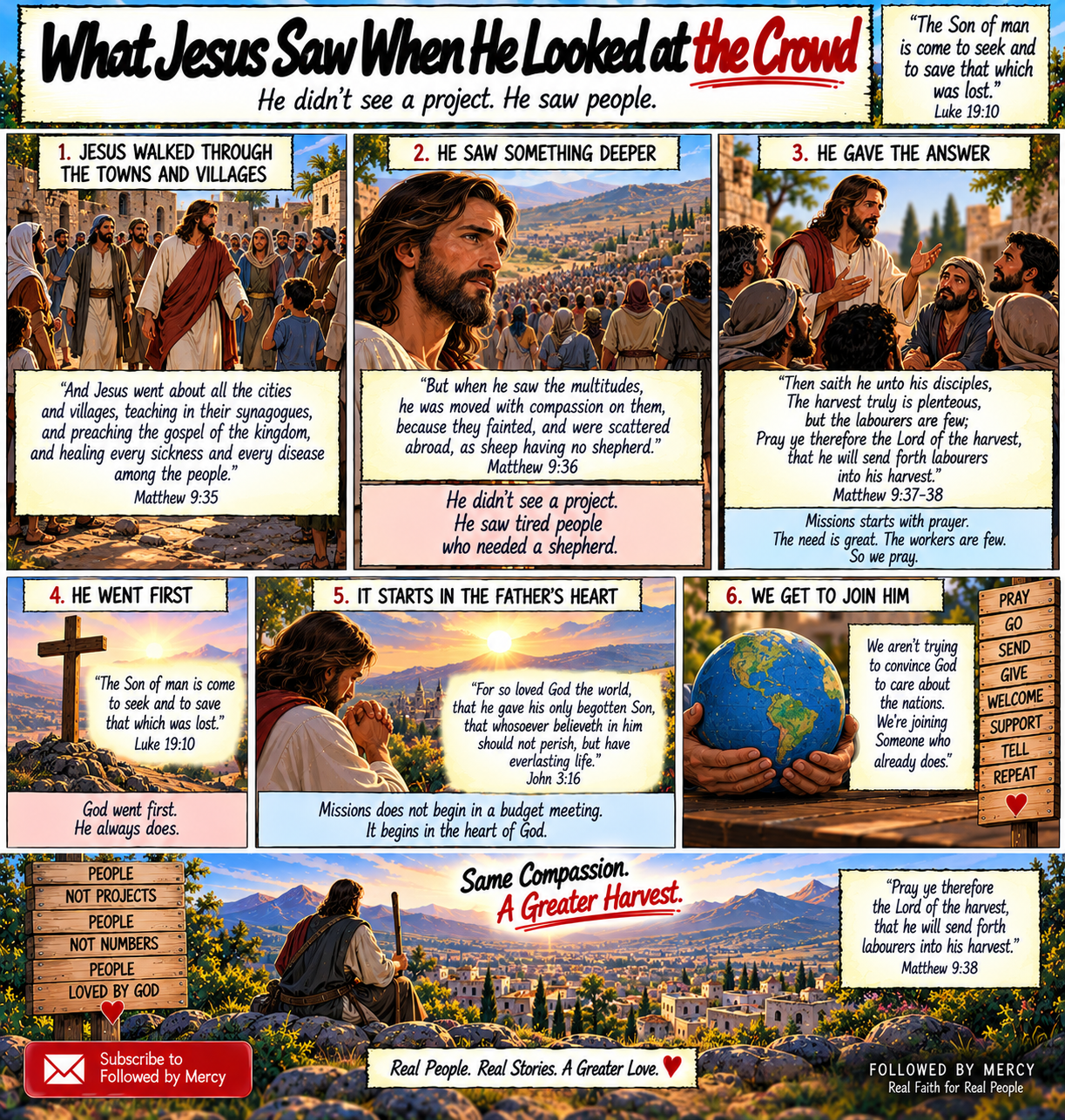
Jesus told us as much. He saw the crowds, felt the weight of the harvest, and gave His disciples a command that pastors and mission committees sometimes overlook:
Then saith he unto his disciples, The harvest truly is plenteous, but the labourers are few; Pray ye therefore the Lord of the harvest, that he will send forth labourers into his harvest. Matthew 9:37-38
Notice what He did not say first. He did not say, "Give." He did not say, "Go." He said, "Pray." The first response to a world of lost people was
intercession. Every church that takes the Great Commission seriously must take prayer for the world seriously.
Every Church Belongs in the Prayer Chain
Some churches feel disconnected from world missions. The field feels distant. The names on the prayer list are strangers. The countries on the map are hard to pronounce. So the missionary prayer letter sits in the bulletin rack, and the people never really pray.
That disconnection is a lie the enemy loves. No church is too small, too rural, or too young in the faith to stand before God for a people group who has never heard the name of Jesus. The harvest is His. The laborers He sends are His. The power behind every breakthrough is His. Our role is to ask.
This is not optional ministry work. This is the baseline. Jesus commanded it. The early church practiced it. Acts 13 records the church at Antioch praying and fasting before God ever sent Paul and Barnabas. The greatest missionary advance in history started on its knees in a local church prayer meeting.
Your church can be that kind of church. It starts with a decision that the world belongs in your prayer meeting.
Put the World in Front of Your People
Abstract prayer is weak prayer. People do not pray with passion for concepts; they pray with passion for persons and places. Wise missions leaders put specific, visible, tangible reminders in front of their congregation.
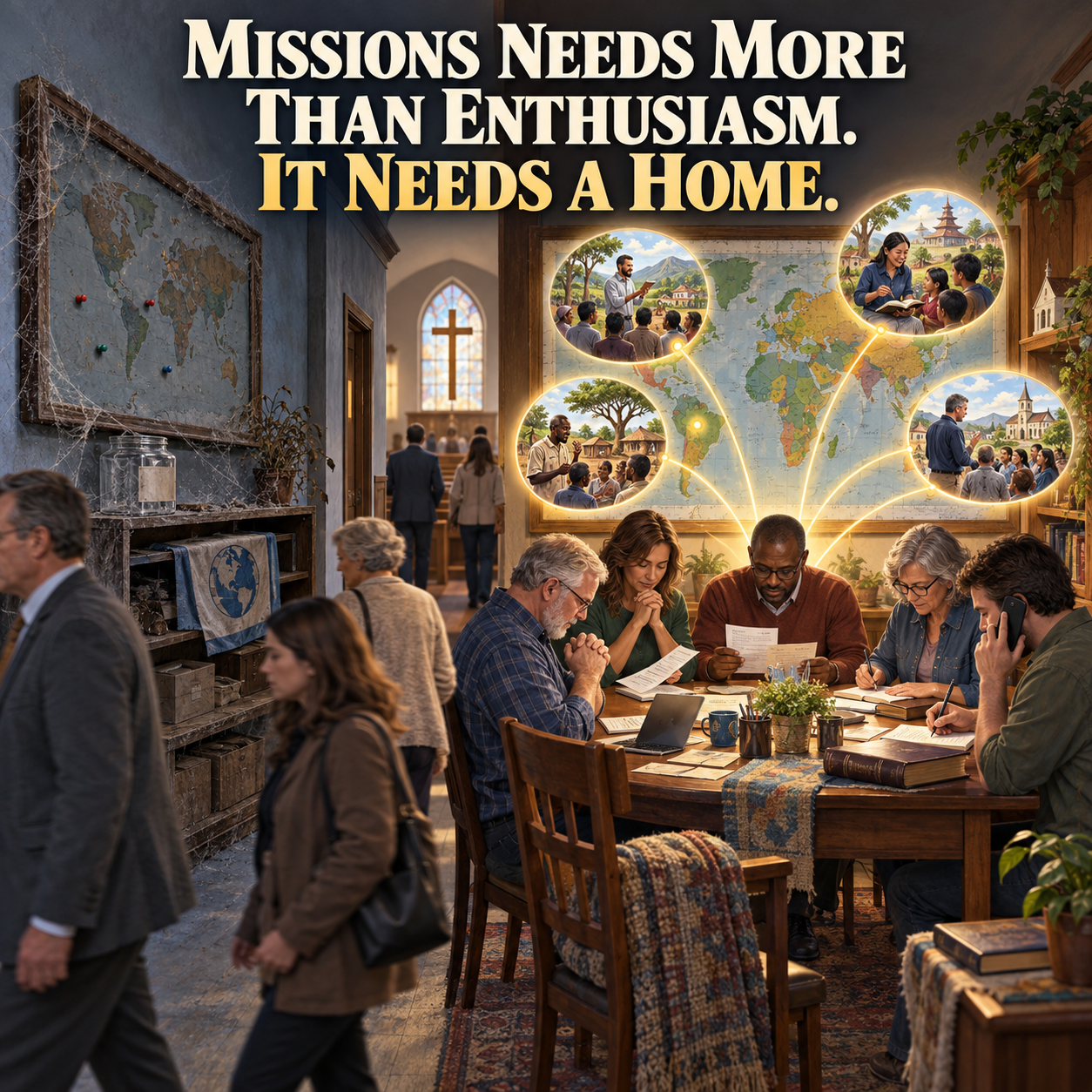
Hang a world map on the wall of your foyer. Mark the countries where your missionaries serve. Put the names of unreached people groups in your bulletin. Display photographs. Project a weekly prayer focus on the screen before the service starts. Give your people something to look at and something to pray toward.
Prayer calendars work. Operation World and Joshua Project provide daily prayer guides for every nation on earth. Distribute them. Put them in the hands of your small group leaders and Sunday school teachers. Give one to every family in your church. Make it easy for your people to pray specifically.
Maps and prayer guides are not decoration. They are discipleship tools. Every time a church member stands over that map and prays for a country by name, they are being formed as a world Christian. That formation happens on its knees before it ever produces a missionary.
Prayer Letters Were Meant to Be Read
Ask your missionaries how many people actually read their prayer letters. The honest answer will break your heart.
A missionary prays over that letter. They pour hours into writing it honestly and clearly. They describe what God is doing, what opposition looks like, what they need most. They put it in the mail trusting that the church back home will receive it, read it, and pray.
Too often, it ends up in a pile and gets recycled.
Change that pattern in your church. Read exceinrpts from missionary prayer letters in your Sunday service. Project a quote on the screen. Include a specific prayer request from the field in your pastoral prayer. Let your congregation hear the voice of the man or woman they are supporting.
When people hear what the missionary actually faces, something happens. Abstract concern becomes targeted intercession. Passive giving becomes active partnership. The person praying begins to feel what the person serving feels. That is exactly what you want.
Make the Connection Personal
The most powerful thing a church can do for its missionaries is refuse to let them become strangers.
When a missionary is a name on a budget line, people do not pray with urgency. When a missionary is a friend, a brother, a sister known by face, voice, and story, people pray differently. They pray like they mean it. They pray because they love someone who is in the fight.
Churches that do missions well invest in relationships, not just programs. They bring missionaries home on furlough and give them real platform time, not a five-minute greeting. They organize teams to visit the field, even if only a handful of people can go. They encourage their members to write letters, send care packages, and follow the missionary's newsletter with the same attention they give to family news.
Encourage your people to write the missionary. Tell them it does not need to be long or eloquent. A handwritten note that says, "I prayed for you this week by name," is fuel for a person who is weary and far from home. Ask your youth group to write letters. Ask your senior adults to adopt a missionary family in prayer and correspondence. Ask a family in your church to take on one missionary as their personal intercession responsibility.
Personal involvement produces personal prayer. Personal prayer produces power.
The Ones Who Wonder How
Let these words from a poem in the life story of William Borden settle into your spirit. Borden gave his fortune and ultimately his life to reach Muslims in China. He never made it to the field. He died in Egypt at twenty-five. But the story of his life moved a generation of young men and women into missions.
This poem, carried in that story, captures what we are talking about:
The weary ones had rest, the sad had joy
That day, and wondered 'how?'
A ploughman singing at his work had prayed,
'Lord, bless them now.'
Away in foreign lands they wondered 'how?'
Their simple word had power.
At home, the 'Gleaners,' two or three, had met
To pray an hour.
Yes, we are always wondering 'how?'
Because we do not see
Someone, unknown perhaps, and far away,
On bended knee.
-- from Borden of Yale by Mrs. Howard Taylor
Read that again. The missionary in a foreign land wonders how their simple words had any power. And the answer is hidden at home. Two or three people. An hour of prayer. A plowman who never left his field.
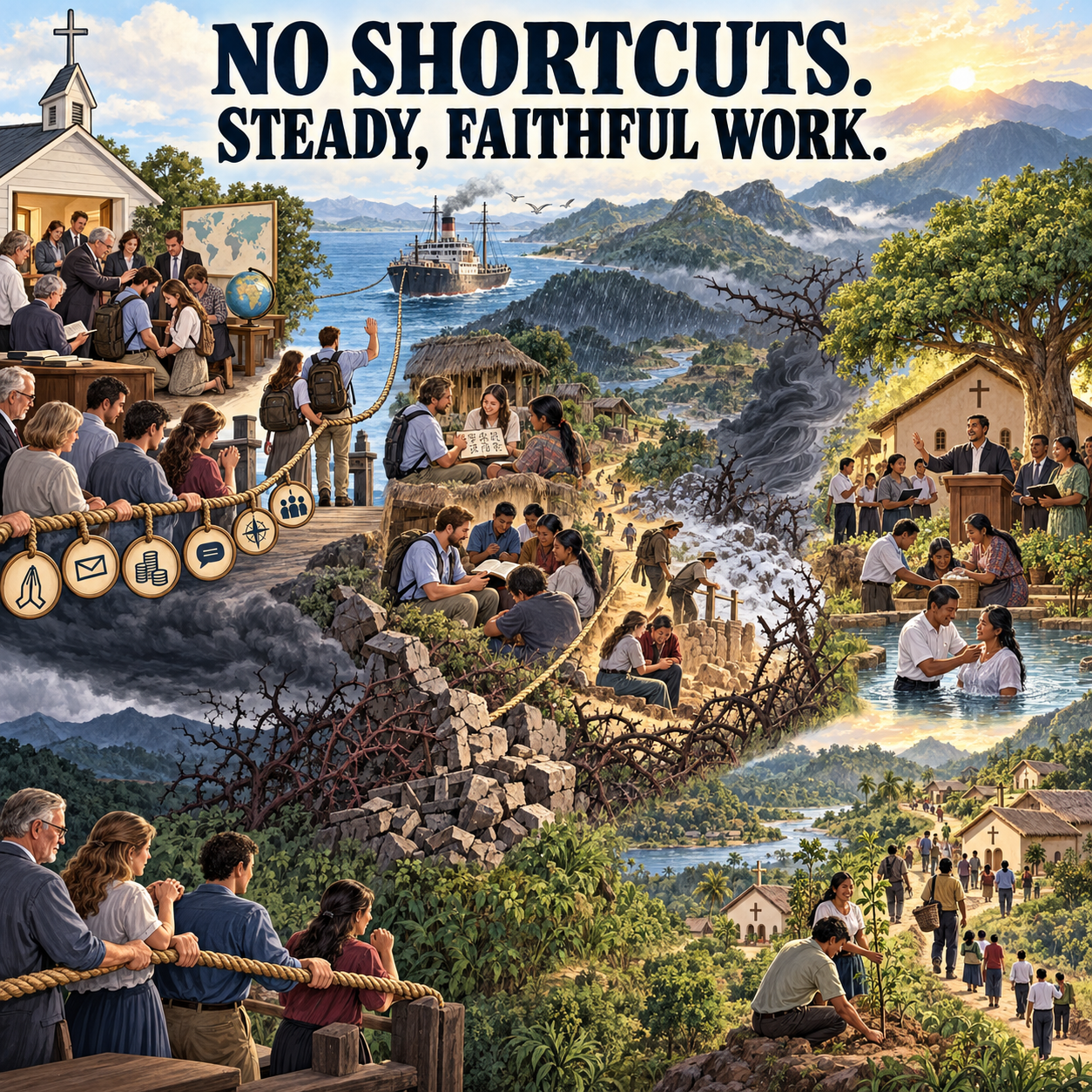
This is the theology of intercession. The visible work on the field is connected by invisible threads to the praying church at home. When your people pray, something moves that could not move any other way. When they stop, something stalls that strategy cannot restart.
The ones on the field are always wondering how. Give them the answer. Bend your knee.
What Your Church Can Do This Week
Start somewhere. Do not wait for a fully developed missions program before you begin to pray. Here are immediate steps any church can take:
First, add a world map to your prayer room or foyer and mark every country with a missionary connection.
Second, read one paragraph from a missionary prayer letter in your next Sunday service. Let the congregation hear a real voice from a real field.
Third, challenge each family to write one letter or email to a missionary this month.
Fourth, organize a prayer hour focused entirely on world missions. Invite your people to pray by country, by name, by need.
Fifth, assign a specific missionary to every small group, Sunday school class, or family, and commit to praying for that person by name every week.
The harvest is plenteous. The laborers are few. Pray.
Frequently Asked Questions
Q: Our church is small. Does our prayer for world missions really matter?
Yes. The poem above was written about two or three people who met to pray for an hour. God does not look at the size of the prayer group; He looks at the sincerity of the intercession. Small churches have moved mountains on the mission field through consistent, faithful prayer.
Q: How do we get our people actually motivated to pray for missionaries they don't know?
Make the missionary known. Share their stories. Read their letters. Show their pictures. Let people hear their voice on video. Arrange visits when missionaries come home. Personal connection transforms obligation into genuine love, and love produces genuine prayer.
Q: What is the best prayer resource for covering unreached people groups?
Operation World and the Joshua Project both provide comprehensive, country-by-country and people-group-by-people-group prayer information. Both are available in print and free online. Either one gives your church a systematic way to pray around the world across a year.
Q: How often should our church have a missions prayer focus?
Every week. Not every quarter, not at the annual missions conference. Every week. Insert it into your pastoral prayer on Sunday. Keep it in your midweek prayer meeting. Make the nations a permanent fixture of your church's intercession, not a seasonal event.
Q: What should we actually say when we pray for a missionary?
Pray what they ask. Read their prayer letters and pray those specific requests back to God. Pray for their physical health, their families, their language learning, their relationships with local believers, their protection from spiritual opposition, their encouragement when they feel like quitting, and their fruit in leading people to Christ.
#WorldMissions #PrayForTheHarvest #AlignmentMinistries #MissionaryPrayer #GreatCommission #ChurchMissions #PrayForMissionaries #HarvestPrayer