If You Expect It, Write It Down
Write It Before You Need It

Most students do not leave over a hard lesson. They leave over a surprise.
They didn't know a rule existed until they broke it and were corrected for something nobody told them.
That is not fair to the student.
If you train men and women for ministry, develop a handbook. Put the rules in writing before class one. A handbook does not make a school cold. It makes it clear, and clarity is a kindness.
"He that is faithful in that which is least is faithful also in much." Luke 16:10
A handbook names what that faithfulness looks like, so a student can aim at it.
Church Comes First
Training grows out of the church, so faithfulness to the church comes first.
Students attend all the services of their church. If a student is not faithful to church, he cannot receive credit. We cannot give credit for ministry training to a student who is absent when ministry happens. The church is where he worships, serves, and follows his pastor. The classroom supports that life, never replaces it.
Students must arrive on time for every service and activity, and on time means fifteen minutes early. Early means ready to pray, greet, help, and settle his heart. Late means distracted, asking others to wait. Leaders learn to be early.
Students must also take part in their church's visitation and soul-winning program. A leader does not only study the gospel. He goes out with it, visits, and learns to point a soul to Christ. Put it in the handbook, with days and times. It matters.
Say Plainly What You Expect for Dress
Every school has expectations for dress. Whatever yours are, write them down and explain them.
Don't leave dress to rumor or correct it after the fact. Say what you expect, when it applies, and who it applies to, in plain words, before the term begins. Explain it clearly and kindly, in advance, so a student can honor it without guessing.
If you expect it, explain it. If you have not explained it, do not correct a student for missing it.
Live by the Standards You Name
Since we are preparing leaders, students live by standards of separation. Name them plainly, so every student knows what is expected.
Some students come from churches with their own standards. Some do not. If a student has none of his own, he can borrow ours while in training. That helps; it isn't a punishment. A young leader needs a clear line while he grows strong enough to hold his own convictions. Write it down. Let it protect, not shame.
Be Faithful in Class
Students must arrive on time to all classes. Early, seated, ready to learn. A late student interrupts the class and misses what he came to learn.
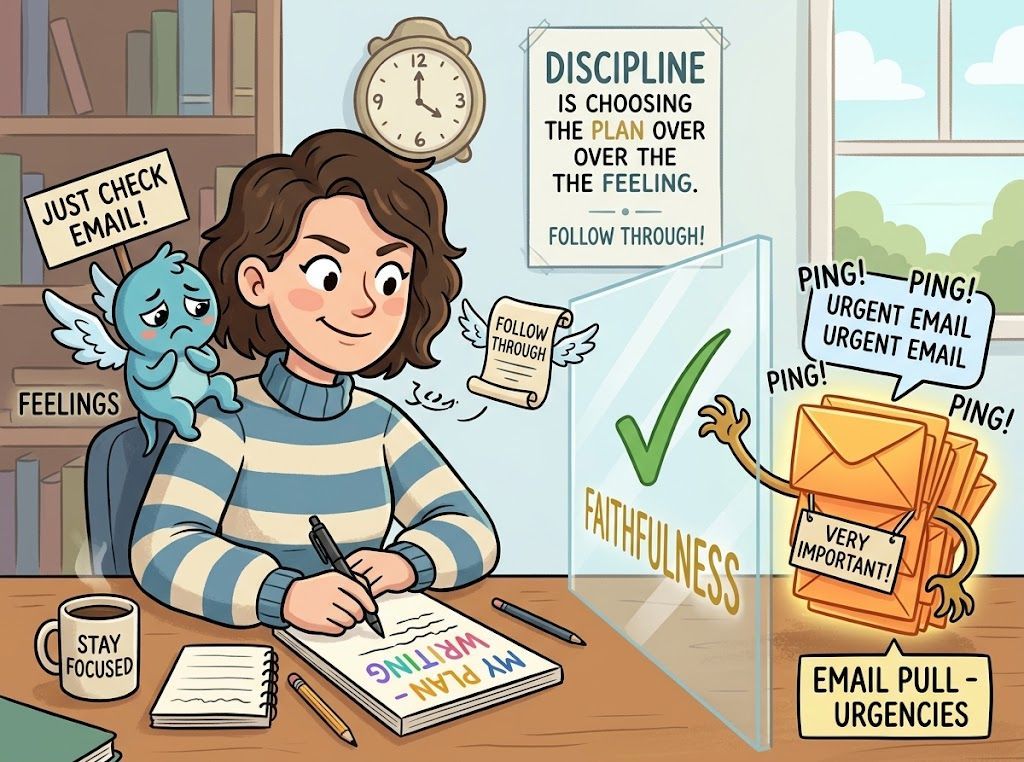
Students must do all indicated homework. Homework is how a student takes a lesson home and makes it his own. A man who will not study in school will rarely study when no one is watching.
Write the class rules down too: start times, late rules, homework rules, makeup work. Then the teacher doesn't invent them in the moment, and the student doesn't wonder what is wanted.
The Weekly Report Tells the Truth
Give every student a weekly activity report.
The report should show the week as it really was. Church services attended? Visiting done? Anyone saved? Contacts made? Devotions done? Who is he discipling, and what lesson are they in?
Leave space for his pastor or departmental supervisor to sign to verify it. The signature keeps the report honest, keeps the student connected to his pastor, and lets the school know what is true.
A weekly report is not a trap. It is a mirror. It helps a student see his week, and a teacher see who needs help or encouragement. Over a term, the reports tell a story. They show growth, or where growth stopped. Either way, the school can help sooner.
Tell Them Who You Take, What You Teach, and Who Teaches
A handbook answers three more questions first.
First, list the different types of students you accept, and what each type is expected to do. A full-time student, a part-time student, a night student, a student preparing for full-time ministry, and a church member who wants to grow may not carry the same load. Say so.
Second, list the courses and say what each is about. A name alone tells little. A short description does. What will he study? What will he learn to do? Why does it matter?
Third, list the professors, once you have several with experience. Name who teaches, and say what they have done. Experience matters. Say who has it, and what God taught them through it.
Write It Before You Need It
"And the things that thou hast heard of me among many witnesses, the same commit thou to faithful men, who shall be able to teach others also." 2 Timothy 2:2
That is the work.
A handbook will not make a student faithful. Only God does that work in a heart, by His grace. But a handbook can remove confusion and give a faithful student a clear path. That is worth doing.
So write it down. Say what you expect for church, time, visitation, dress, conduct, class, and the weekly report. List who you take, what you teach, and who teaches. Give it to every student on day one.
Teach with patience, correct with kindness, trust God with growth. The handbook sets the path. Grace sets the heart. And a clear path, walked with a glad heart, is how leaders are made.