Leading Without Collapsing
Lessons from Moses’ Breaking Point

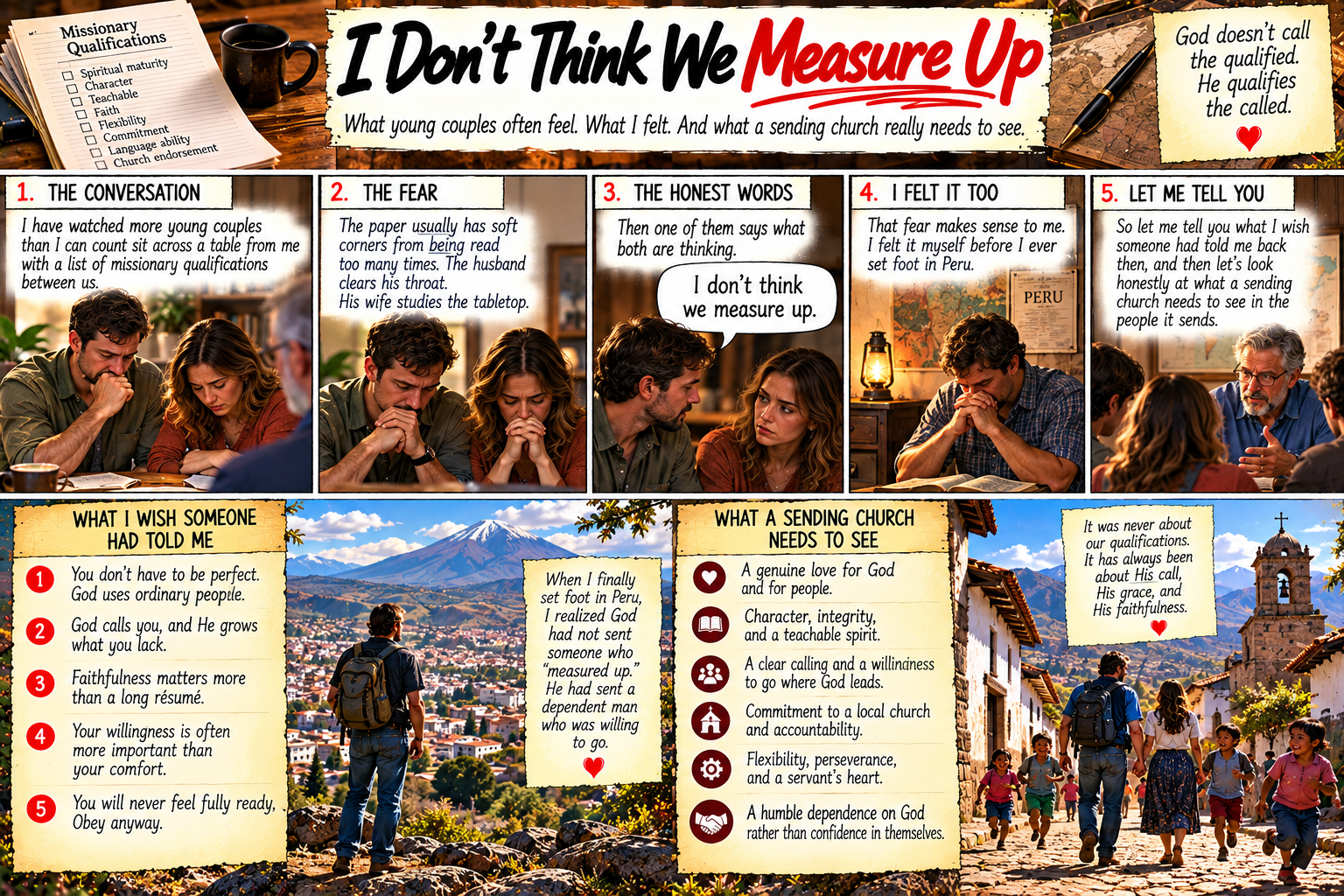
Have you ever felt like the weight of the world was resting entirely on your shoulders? If you have spent any time in ministry or leadership, you know that feeling well. It is that heavy, suffocating sensation that you are the only one holding things together. I have been there more times than I care to admit. Whether I was planting churches in the Andes mountains of Peru or navigating the challenges of a growing ministry back home, the temptation to carry it all alone was always lurking.
However, we were never designed to be the sole source of strength for everyone around us. When we try to play that role, we eventually hit a wall. Even Moses, one of the greatest leaders in history, reached a point where he simply couldn't take another step. He collapsed under the pressure, and his story in Numbers 11 gives us a vivid picture of what happens when the burden becomes too heavy for one man to bear.
The Scene: A Leader at the End of His Rope
The people were complaining again. It wasn't just a small group of grumblers; it was the entire nation weeping at the doors of their tents. They wanted meat. They missed the food of Egypt. Consequently, Moses felt the heat of their discontent and the weight of their demands. He didn't just feel tired; he felt utterly defeated. In his distress, he cried out to God with a raw honesty that many of us are afraid to use.
Numbers 11:12 “Have I conceived all this people? have I begotten them, that thou shouldest say unto me, Carry them in thy bosom, as a nursing father beareth the sucking child, unto the land which thou swarest unto their fathers?”
Moses was basically saying, "Lord, I didn't give birth to these people! Why am I the one who has to carry them like a baby?" This imagery is incredibly powerful. In the original Hebrew, the word for "carry" means to lift, bear, or carry a burden. It is the same word used for bearing sin or carrying
responsibility. Moses realized that leadership, in God’s eyes, is not about managing a system. Instead, it is about carrying human lives.
Why the "Nursing Father" Collapsed
The problem wasn't that Moses lacked a heart for the people. Specifically, the text shows that he was trying to fulfill a parental role that was physically and emotionally impossible for a single human being to sustain. The "bosom" represents a place of extreme intimacy and protection. Imagine a father holding a tiny, helpless infant close to his chest for every hour of every day. That infant is totally dependent. That infant cannot survive without that constant care.
Moses was trying to be that "nursing father" to millions. He thought he had to be the source of their life, their food, and their direction. Eventually, this led to a total emotional breakdown. He even asked God to kill him rather than let him continue in that state. This is a sober warning for us today. If you try to be the source of life for your family, your church, or your business, you will eventually break.
“The Christian life was never meant to be powered by fear, pressure, or performance. It was meant to be lived from being loved first.”
When we lead from a place of performance, we believe that everything depends on our strength. We think if we stop, everything will fall apart. This is a form of legalism that I struggled with for years. I didn't become legalistic because I hated grace; I became legalistic because I loved God and feared losing the work He had begun. But the truth is, the big leap of faith is believing that God loves you and His people exactly as you are, regardless of your productivity.
The Solution: Shared Leadership and the Spirit
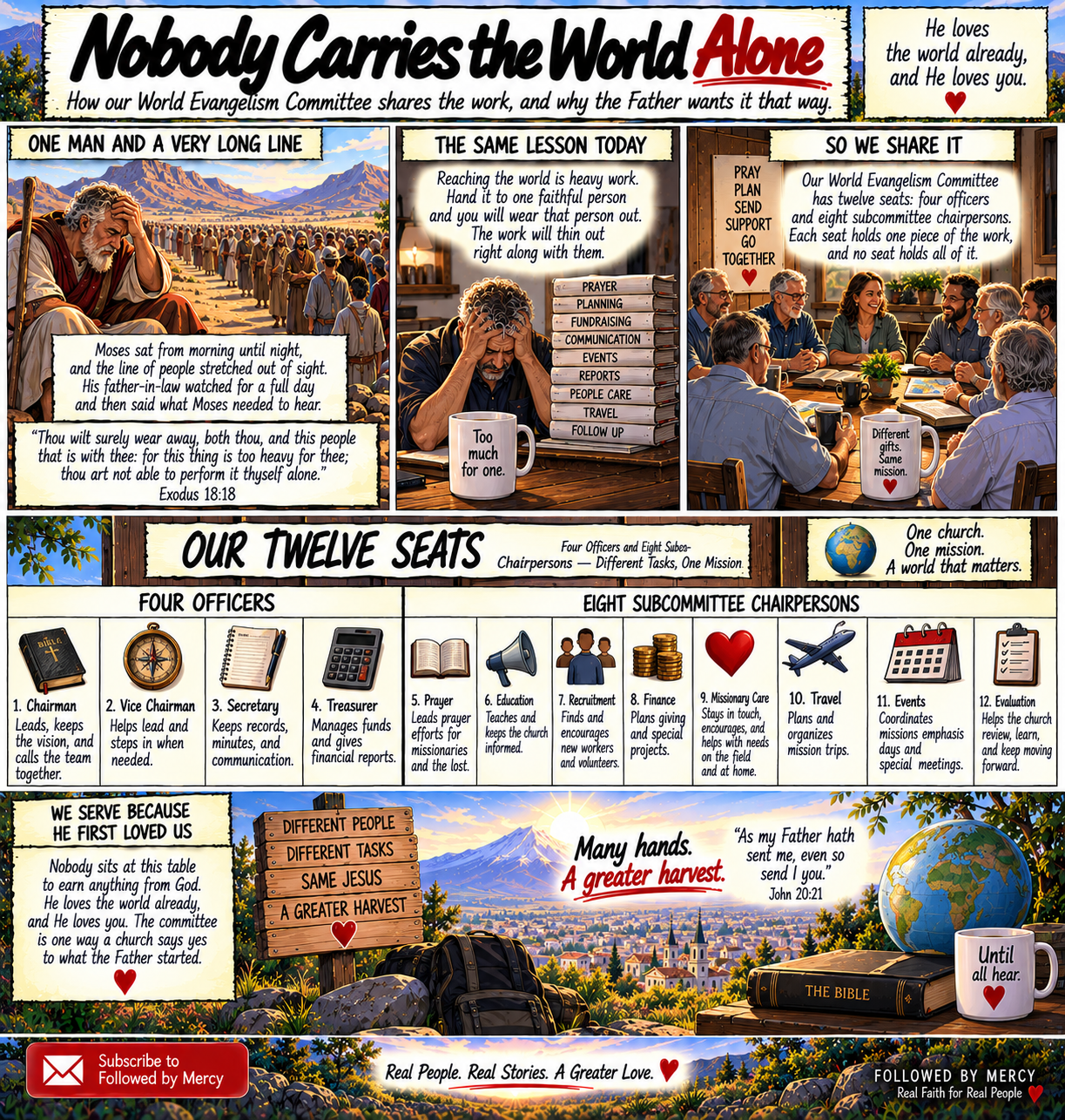
God did not rebuke Moses for being overwhelmed. Instead, He provided a structural and spiritual solution. He told Moses to gather seventy elders. God promised to take the Spirit that was on Moses and put it on them as well. This is a foundational principle of biblical leadership: it must be shared.
Shared leadership is not just a management trick to save time. Specifically, it is a spiritual necessity. When God distributed the Spirit among the seventy, He was demonstrating that no single person is meant to hold the monopoly on God’s power or presence within a community. Therefore, if you are leading alone, you are leading outside of the biblical pattern.
You need people who can "carry the burden of the people" with you. This requires vulnerability. You have to be willing to admit that you don't have all the answers. Meanwhile, it requires trust. You have to believe that the same Holy Spirit working in you is also working in the people around you. Austin Gardner has seen this repeatedly in faith-based development: the most resilient ministries are those in which authority is decentralized and the burden is shared.
Jesus: The Only One Who Can Carry Us All
While Moses was a great leader, he was only a shadow of the One to come. Moses broke under the weight of the people, but Jesus Christ carried the weight of the entire world and did not collapse. He is the ultimate "Nursing Father" and the True Shepherd.
Isaiah 40:11 “He shall feed his flock like a shepherd: he shall gather the lambs with his arm, and carry them in his bosom, and shall gently lead those that are with young.”
Jesus fulfills what Moses could not. He invites us to come to Him when we are weary and heavy-laden. He doesn't give us a new list of chores. Instead, He gives us rest. He carries our burdens perfectly because He is the source of life.
“Rest doesn't come after you fix yourself. Rest comes first.”
When we understand that Jesus is the one truly carrying the people, the pressure on us evaporates. We are not the saviors. We are just under-shepherds. This shift in perspective is what brings mercy into our leadership. We can be patient with others because we know God is patient with us. We can let go of the need to control because we know the Spirit is in control.
Practical Steps to Lead Without Collapsing
How do we apply this to our lives right now? Whether you are a pastor, a parent, or a community leader, you need a sustainability strategy rooted in grace.
- Stop Leading from a Distance.
The "bosom" imagery in Numbers 11 requires closeness. You cannot carry people you won't get close to. However, this closeness should not lead to codependency. It should lead to a genuine connection. - Distribute the Responsibility.
Who are your "seventy elders"? If you don't have a team, start praying for one. Don't look for people who just agree with you; look for people who are filled with the Spirit. - Embrace Your Limitations.
Admitting you are overwhelmed isn't a sign of spiritual failure. It is a sign of being human. Moses’ honesty with God was the catalyst for his relief. - Anchor Your Identity in Being Loved.
Your worth is not measured by the size of the crowd you carry. You are a child of God before you are a leader of men.
Moving Toward Grace and Mercy
Leading without collapsing is only possible when we stop trying to be God. We must realize that His mercy is not trailing behind us with conditions; it is running toward us with intention. If you have felt "canceled" by the weight of expectations or the criticism of others, remember that your primary calling is to rest in Him.
Throughout my 50+ years of ministry, including surviving Stage 4 cancer and a grueling battle with COVID, I have learned that my strength is a very poor foundation. But His grace? His grace is enough. Faith-based development isn't about building monuments to our own endurance. It is about building communities that reflect the nurturing, burden-bearing love of our Father.
If you want to dive deeper into this journey of moving from performance to grace, I encourage you to check out my About page to see how God has worked through the messes of my own life. You don't have to carry the infant alone. There is a Spirit-filled community and a loving Savior ready to lift the weight with you.
FAQ: Biblical Leadership and Burnout
What did Moses mean by "nursing father" in Numbers 11:12?
Moses used this imagery to describe the intense, constant, and life-sustaining responsibility he felt for the Israelites. It highlights that biblical leadership is personal and nurturing, but also shows that attempting to fulfill this role alone is unsustainable for any human.
How can I tell if I am leading in my own strength or in God's?
If your leadership is characterized by constant anxiety, a need for control, and a feeling of being the sole "source" for others, you are likely relying on yourself. Leading in God’s strength is marked by a willingness to share authority, a regular rhythm of rest, and a deep sense of being loved by God regardless of your performance.
Why is shared leadership so important in the Bible?
God distributed the Spirit to the seventy elders to show that the burden of care is meant to be a collective effort. Shared leadership prevents the "collapse" of the primary leader, ensures diverse wisdom, and reflects the nature of the Body of Christ, where every member has a role to play.
#Grace #Mercy #AustinGardner #BiblicalLeadership #FaithBasedDevelopment