The Weight of the Bosom
Why Leadership is Burden-Bearing

Most of us have been taught that leadership is about influence, strategy, and getting people to follow a vision. We read books on managing systems and maximizing productivity. However, when we look at Moses's life, we see a completely different picture of what it means to lead. Specifically, in the book of Numbers, we find a leader who is absolutely at the end of his rope.
The people are complaining again, and the weight of their needs is crushing him. Consequently, Moses cries out to God with a question that upends our modern understanding of leadership. He doesn't ask for a better organizational chart or a new management technique. Instead, he asks about the physical and emotional cost of carrying people.
Numbers 11:12 “Have I conceived all this people? have I begotten them, that thou shouldest say unto me, Carry them in thy bosom, as a nursing father beareth the sucking child, unto the land which thou swarest unto their fathers?”
In this raw moment, Moses reveals the true nature of biblical leadership. It is not about standing on a platform and pointing the way. Rather, it is about the intimate, often heavy reality of burden-bearing. To understand this, we have to look closely at the language and the heart of God hidden in this text.
Unpacking The Hebrew Heart of Leadership
When Moses asks if he must "carry" the people, he uses the Hebrew word nasa. This is one of the most significant words in the Old Testament. Its root meaning is to lift up, to bear, or to take away. While we often think of leading as "moving forward," the Hebrew thought behind nasa suggests that leading is actually "lifting up."
Interestingly, this is the same word used throughout Scripture for bearing sin or carrying a burden. When a leader is called to nasa a people, they aren't just directing them. They are literally taking on the weight of those people themselves. Therefore, leadership is not a position of power; it is a position of weight.
If you feel the "heaviness" of leadership today, you aren't doing it wrong. Actually, that heaviness is the proof that you are operating in a biblical model. You are carrying souls, not just supervising tasks. This kind of leadership requires more than just a sharp mind; it requires a strong back and a tender heart.
The Bosom vs. The Boardroom
Moses mentions carrying the people in his "bosom." In ancient Hebrew culture, the bosom symbolized protection, intimacy, and identity. It was the fold of the garment where a person would keep their most precious belongings or where a parent would hold a child.
In our modern world, we are often told to keep a professional distance. We are warned not to get too "emotionally involved" with those we lead. However, the biblical model of a "bosom leader" suggests that if you aren't close enough to feel their heartbeat, you aren't close enough to lead them.
Management happens from a distance, but ministry happens in the bosom. This means leadership is inherently relational and deeply personal. It is the opposite of the "distant manager" who issues memos from an ivory tower. A true leader, like Austin Gardner, knows that you cannot help someone heal or grow if you are unwilling to let them into your personal space.
The Image of the Nursing Father
One of the most striking phrases in this verse is "as a nursing father beareth the sucking child." This imagery is incredibly counter-cultural. Moses uses a maternal image: a nursing child, to describe a male leader’s responsibility. This tells us that leadership is parental in nature.
A "nursing father" (or caregiver) is someone who nourishes, protects, and sustains a life that cannot survive on its own. It is a picture of total dependence. The child contributes nothing to the relationship but its needs. Meanwhile, the caregiver gives everything.
Many leaders today struggle because they expect the people they lead to "add value" to them. We want the team to make us look good or make our jobs easier. But if we follow the pattern in Numbers 11, we realize that we are there to sustain them. We are the ones who bear the cost so that they can grow.
https://cdn.marblism.com/njtc9onpShg.webp
Why the Burden Feels Unbearable
Moses eventually breaks down because he realizes he cannot be the "source" for all these people. He tells God, "I am not able to bear all this people alone, because it is too heavy for me." This is a crucial theological turning point.
While we are called to carry people, we were never meant to be their ultimate sustainer. That role belongs to God alone. When we try to be the "source" instead of the "steward," we burn out. We become legalistic, performance-driven, and exhausted.
“You are not behind. You are not being graded. You are being held.”
If you are feeling the crushing weight of leadership, remember that you are a "nursing father," but God is the Father of the family. You are carrying them in your bosom, but God is carrying you in His. For more on how to rest in this reality, I encourage you to read about The Big Leap of Faith. Understanding that you are loved exactly as you are changes how you carry others.
Leading from the Finished Work
In the New Testament, we see the ultimate fulfillment of this burden-bearing in Jesus. He is the Good Shepherd who nasa (carries) the lost sheep on His shoulders. He is the One who took the weight of the entire world’s sin and carried it to the cross.
Because of what Jesus did, our leadership doesn't have to be a desperate struggle to perform. We lead out of the overflow of being loved. When we understand that the heavy lifting of our salvation and our worth is already finished, we can carry others with grace instead of grit.
Leadership is still hard. It still involves sacrifice. However, it is a sacrifice that flows from a place of security. We aren't carrying people to earn God's favor; we are carrying them because we have already received it. This is the heart of Austin Gardner’s ministry and the mission of Alignment Ministries.
Practical Steps for the Burdened Leader
- Acknowledge the weight. Stop pretending that leadership is easy. Admit to God that the people are heavy and the responsibility is significant.
- Move closer. If you’ve become a "distant manager," ask God to give you a "bosom heart." Look for ways to connect personally with those you serve.
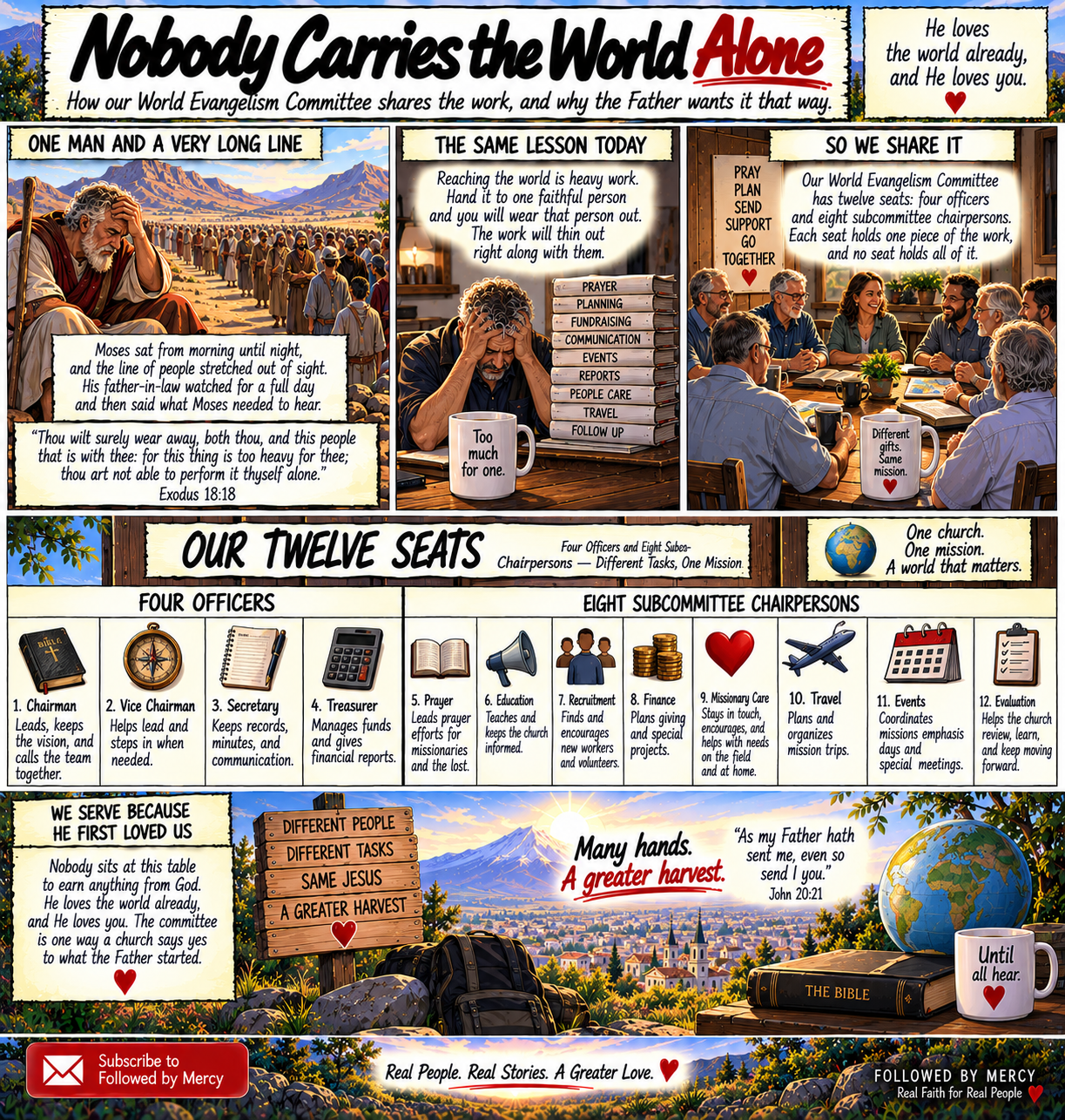
- Find your elders. Just as God gave Moses seventy elders to share the burden, you need a community. Don't try to be the hero who carries the world alone.
- Rest in your identity. Your value is not tied to how well you lead or how much you accomplish. You are a child of God first.
The goal of leadership is not to reach a destination where you no longer have to carry anything. The goal is to become more like Christ, the ultimate Burden-Bearer. As you carry your "sucking child" toward the land God promised, do it with the confidence that you are never walking alone.
If you’d like to hear more about navigating the messy parts of ministry with grace, check out the Followed By Mercy podcast. We talk about these real-life leadership struggles every week.
FAQ: Biblical Leadership and Burden-Bearing
What is the difference between management and biblical leadership?
Management focuses on systems, processes, and efficiency to reach a goal. Biblical leadership focuses on the spiritual health and growth of people, treating the relationship with the "bosom" intimacy of a parent.
Why does leadership feel so heavy and isolating?
Leadership is heavy because you are carrying the weight of others' struggles and growth (nasa). It feels isolating when we forget that we are stewards, not the source, of the life we are leading.
How can I carry others without burning out?
The key is to lead from a place of "rest." You must realize that God is carrying you while you carry them. When you stop trying to earn God’s love through your leadership performance, the burden becomes a labor of love rather than a weight of fear.
#AustinGardner #BiblicalLeadership #GraceCentered #MinistryMindset #FollowedByMercy