Lost in Translation
The consequences of ignoring local context in church planting.
A man can carry the gospel across the world and still lose it in translation.
Not because the gospel failed. Because he never learned the language of the people he came to reach. Not just their words. Their ways. What honors them. What offends them. How they grieve, how they celebrate, how a family works, how trust is earned.
He preaches the truth, but they hear something foreign. They hear his culture, not Christ. And they walk away, not from Jesus, but from a church that never felt like it belonged to them.
The Mistake
The mistake is ignoring the importance of cultural sensitivity and contextualization in church planting.
It is easy to do. A man arrives in a new place with a picture in his mind of what a church looks like. The music he likes. The order of service he grew up with. The clothes, the building, the way people pray, the way a pastor talks.
So he builds that church, in that place, and he calls it faithful. But it is not the church of that place. It is a copy of the church he left behind.
The gospel is for every people. The forms of one people are not.
"And the Word was made flesh, and dwelt among us." John 1:14. God did not shout the gospel from heaven. He came and lived among us. He learned our life from the inside. He spoke our language, ate our food, walked our roads. If God Himself came that close, a church planter cannot stay at a distance.
What It Costs
Ignoring local context costs a planter more than he knows.
First, it costs him his hearers. People can tell when you have not bothered to understand them. They may be polite. They may listen once. But they will not trust a man who treats their whole way of life as a problem to be fixed.
Second, it costs the gospel its hearing. When a planter confuses his customs with the gospel, people stumble over his customs and never get to Christ. The offense should be the cross, not the music, not the dress, not the way he runs a meeting.
Third, it costs the church its future. A church built as a copy of another country will always need the foreigner to run it. Local men will never feel it is theirs. Local leaders will never rise, because the church was never shaped for them to lead.
A church that stays foreign stays small and dependent. That is not what Jesus died for.
Learn Before You Teach
The better way starts with listening.
Learn the language, and learn it well. Not enough to preach a sermon. Enough to pray with a mother, to sit with a grieving father, to laugh with a neighbor. People trust a man who has taken the time to speak their words.
Learn the culture. How do people show respect? What does honor mean here? How does a family make a decision? What do people fear? What do they hope for? You cannot preach to a people you do not know, and you cannot know them from a distance.
Ask questions, and then listen to the answers. Find the men and women who know the place, and let them teach you. A planter who arrives as a learner will be heard as a teacher. A planter who arrives as an expert will be ignored.
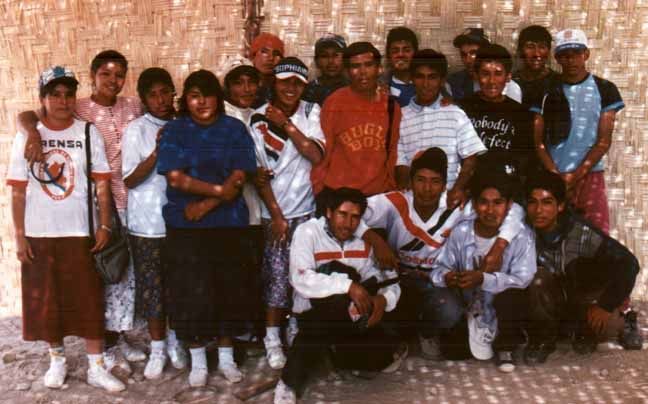
I learned this in Peru. I had to learn Spanish, and I had to learn the people. The words were only the beginning. The real learning was how they lived, how they loved their families, how they faced hard times. The gospel did not change. But the way I carried it had to change, or it would never reach their hearts.
Paul in Athens
Paul knew how to do this.
In Pisidian Antioch, he preached to Jews, so he began with their history, with Abraham and David, and showed how it all led to Jesus. Acts 13.
In Athens, he preached to Greeks, so he began where they were. He walked through their city; he saw their altar to the unknown god, and he said,
"Ye men of Athens, I perceive that in all things ye are too superstitious. For as I passed by, and beheld your devotions, I found an altar with this inscription, TO THE UNKNOWN GOD. Whom therefore ye ignorantly worship, him declare I unto you." Acts 17:22-23.
He did not start by attacking their poets. He quoted them. He did not start by mocking their religion. He used what they already knew as a bridge to the truth they did not know. And then he preached Christ and the resurrection, plainly. He changed his starting point. He never changed his message.
"To the Jews I became as a Jew, that I might gain the Jews; to them that are under the law, as under the law, that I might gain them that are under the law; To them that are without law, as without law, that I might gain them that are without law. I am made all things to all men, that I might by all means save some." 1 Corinthians 9:20-22.
All things to all men. Not to please them. To reach them.
Keep the Message, Change the Method
This is the line a planter must hold, and hold clearly.
The message never changes. Jesus died for sinners. He rose again. Repent, believe, and live. That is the gospel in every country, in every language, in every century.
The method must change. The language, the music, the meeting time, the way a church is organized, the illustrations in a sermon, the way a man is trained- all of these can change, and they should change, so the people can hear the message clearly.
The church in Jerusalem learned this early. When Gentiles began to believe, some wanted to make them live like Jews first. The apostles said no. "But we believe that through the grace of the Lord Jesus Christ we shall be saved, even as they." Acts 15:11. They did not lay the customs of one people on another people as a condition for salvation.
A planter does the same. He asks, in every place, what is the gospel, and what is only my habit? What must stay, and what can change so the people can hear?
The Better Way
So what should a church planter do instead? Prioritize cultural sensitivity and contextualization. Adapt the approach to fit the specific cultural context of the community.
Start by listening. Learn the language. Live among the people. Eat with them. Mourn with them. Rejoice with them.
Let local believers help shape the church. Let them say what the music should sound like, when the church should meet, how a wedding or a funeral should be honored. A church shaped by its own people will be a church its own people can lead.
And trust God with the result. A church that looks like the people it serves is not a compromise. It is the gospel taking root in new soil, the way it has in every country since the day of Pentecost, when every man heard the wonderful works of God in his own tongue. Acts 2:11.
The gospel was never meant to sound foreign. It was meant to sound like good news, in the language of the people hearing it, in the life of the place where they live.
Learn their world. Love their people. Preach Christ plainly. Then watch God build a church that belongs to them, and to Him.