More Than a Check
How Every Church Can Pray, Send, and Stand Beside Its Missionaries

Why world evangelism belongs in every church, and what it looks like to stand beside the people we send!
How serious are we about taking the Gospel to the lost?
I don't ask that to shame anyone. I ask because the answer shows up in how a church treats the people it sends.
Choosing a missionary takes work. Sending one takes work. Standing behind that
missionary for years, until a healthy church takes root and starts planting others, takes more work than most of us expect.
There are no shortcuts here, and nobody has found a quick and easy method. Only steady, organized effort moves the kingdom forward against the forces of evil on the mission field.
That sounds heavy. Stay with me, because it's actually good news.
THE FATHER SENT FIRST
Missions didn't start with a church committee. It started in the Father's
heart.
"For God so loved the world, that he gave his only begotten Son." (John 3:16)
Jesus lived that love out loud. Lepers felt His touch. Sinners shared His table. A woman everyone else avoided found Him waiting at a well. He put His whole mission into one sentence:
"For the Son of man is come to seek and to save that which was lost" (Luke 19:10).
After the resurrection, He turned to His friends and said this:
"As my Father hath sent me, even so send I you." (John 20:21)
Read that slowly. The sending began with the Father, and He handed it to us. A church that sends missionaries isn't adding a line to its budget. It's joining what the Father has been doing since before any of us were born.
Grace comes first here, too. You don't support missions to earn God's smile. He already loves His church. Missions is what that love does when it starts moving.
EVERY CHURCH HAS A PART
It's easy to think missions belongs to the big churches with the big budgets. Scripture doesn't divide it that way.
"And how shall they hear without a preacher? And how shall they preach, except they be sent?" (Romans 10:14-15)
Somebody has to do the sending. That somebody is the local church, yours and mine, whatever its size.
Here's the freeing part. Jesus said,
"I will build my church; and the gates of hell shall not prevail against it" (Matthew 16:18).
The work belongs to Him. We don't trust a clever plan or a proven system. There's no shortcut, and we don't need one, because our confidence sits in Christ Himself. Our part is to stay faithful and stay close.
A CHURCH SENDS PEOPLE, NOT JUST MONEY
I hold that a church can't stop at writing checks. It carries responsibility for the care, guidance, and nurture of the missionaries it sends, spiritually and emotionally as well as financially. When you put in little effort, you shouldn't expect much. That isn't a threat. It's how planting works.
Sending a missionary isn't a transaction. It's a relationship with people we love.
The church at Antioch understood that. The believers fasted and prayed, laid their hands on Barnabas and Saul, and sent them away (Acts 13:3). Nobody mailed a check and hoped for the best. When the two came home, the church gathered, and the missionaries "rehearsed all that God had done with them" (Acts 14:27). The church stayed in the story from the first prayer to the final report.
Paul never forgot a friend named Onesiphorus, who
"oft refreshed me, and was not ashamed of my chain" (2 Timothy 1:16).
Every missionary needs an Onesiphorus.
I spent decades in Arequipa, Peru. Money matters on the field. So does a phone call, a letter, a name spoken in prayer. Missionaries get tired, and they get lonely. Many wonder if anybody back home still remembers them.
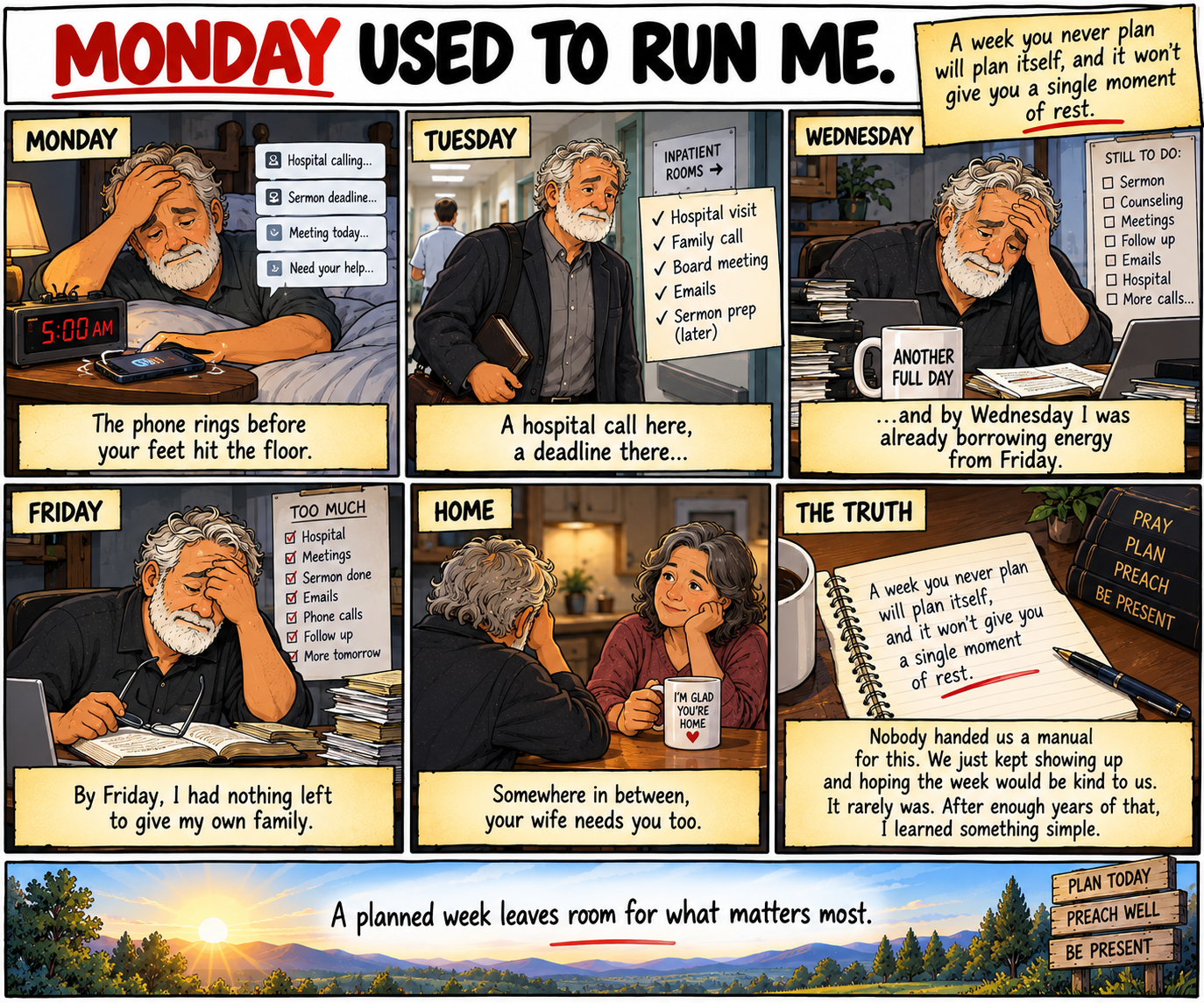
WHAT CARE LOOKS LIKE ON AN ORDINARY MONDAY
Whatever your church's size, here are a few places to start.
Pray by name. Lift up missionaries every week, out loud in the service. Not "missionaries everywhere." Real names.
Call them. Video calls cost almost nothing now. Ask how they are before you ask what they've accomplished.
Check on the family. Field life presses hard on a marriage and on children.
Remember the hard days. Birthdays, anniversaries, and the day a parent back home passes away, and they can't be there.
Offer guidance when they ask. A pastor who knows the work can be a steady voice, a fellow servant, and not a boss.
Welcome them home well. On home assignment, give them rest before you give them a schedule.
Go and see the work. One visit from a pastor changes how a whole church prays.
A small church can do every one of these. John wrote to his friend Gaius about traveling workers:
"We therefore ought to receive such, that we might be fellowhelpers to the truth" (3 John 8).
Thirty people can pray by name. Thirty people can write letters. Fellowhelpers doesn't mean carrying the full salary. It means standing shoulder to shoulder.
A CROWD NO ONE CAN COUNT
Here's where all of this leads.
"A great multitude, which no man could number, of all nations, and kindreds, and people, and tongues, stood before the throne, and before the Lamb." (Revelation 7:9)
Some of the faces in that crowd will be there because a church prayed, sent, and stayed close. Maybe yours. You may never meet the people who come to Christ in a village you'll never visit. The Father knows every one of them by name.
Nobody carries this alone. Jesus made the missionary and the sending church the same promise:
"lo, I am with you alway, even unto the end of the world" (Matthew 28:20).
He goes with the one on the field. He stays with the one at home.
If this stirred something in you, I'd love to have you along.
Subscribe to Ministry by Mercy, and new articles for pastors, missionaries, and church leaders will land in your inbox as I write them. We're all followed by mercy, and that mercy reaches to the ends of the earth.
#FollowedByMercy #AudienceOfOne
Audience of One