Why Every Convert Needs a Church, Not Just a Decision
The gospel doesn't end with a decision. It leads every new believer into a family where grace, truth, and the Father's love can take root and grow.

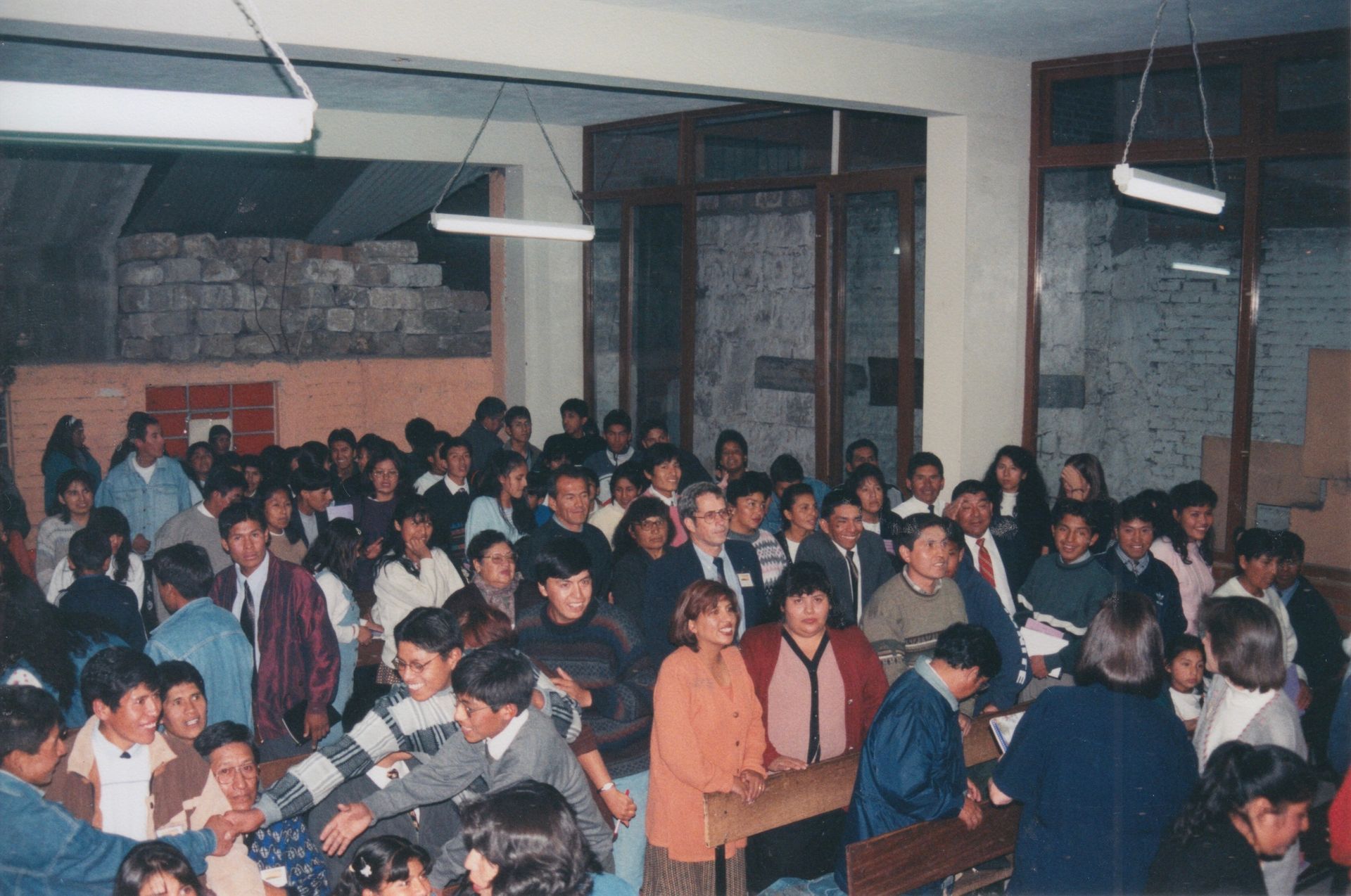
I've knelt with a lot of people at the moment they first believed. A tract in someone's hand. A crusade altar call. A quiet conversation on a bus in a country I could barely pronounce. Every one of those moments felt like heaven touched earth. And it did.
But I learned something the hard way, over fifty years of this work: a decision without a
church is a baby left on a doorstep. Somebody has to take that child home.
The Day I Realized a Decision Isn't the Finish Line
Early in my ministry, I could point to numbers. Souls won. Tracts handed out. Hands raised. I was proud of those numbers, and some of them were real and lasting.
But years later, I started running into the same people, and too many of them weren't walking with the Lord anymore. Not because they hadn't meant it. Not because grace had failed them. It was because nobody ever brought them into a family.
They had a
testimony. They didn't have a home.
What Evangelists and Tracts Were Never Meant to Do
Evangelism is a gift from God to the church. Paul told the Ephesians that Christ Himself gave evangelists, along with pastors and teachers,
"for the perfecting of the saints, for the work of the ministry, for the edifying of the body of Christ" (Ephesians 4:11-12).
Read that again. The evangelist's job points toward the body of Christ. It was never meant to replace it.
A tract can plant a seed. A crusade can bring a harvest. But a seed left on top of the ground dies. It has to be planted somewhere it can put down roots, get watered, and stand against the wind. That somewhere is a local church.
I don't say this to diminish soul winning. I've spent my whole life doing it, and I'll keep doing it until I die. I say it because I love new believers too much to leave them standing alone after the most important moment of their life.
Paul Never Left a City Without Planting a Church
Look at how the apostle Paul actually worked. He didn't preach and move on. Acts tells us what he did in Lystra, Iconium, and Antioch after he'd already won people to Christ there:
"Confirming the souls of the disciples, and exhorting them to continue in the faith... And when they had ordained them elders in every church, and had prayed with fasting, they commended them to the Lord, on whom they believed" (Acts 14:21-23).
He didn't just make converts. He gave them elders. He gave them a family with a father figure to walk beside them. He told Titus to do the same thing:
"For this cause left I thee in Crete, that thou shouldest set in order the things that are wanting, and ordain elders in every city" (Titus 1:5).
Every city needed more than a memory of a sermon. It needed a church.
New Believers Need a Family, Not Just a Memory
On the day of Pentecost, three thousand people got saved in one afternoon. That's the dream, right? But look at what happened next:
"They continued stedfastly in the apostles' doctrine and fellowship, and in breaking of bread, and in prayers" (Acts 2:41-42).
They didn't scatter. They gathered. And the writer of Hebrews later had to remind believers not to lose that habit:
"Not forsaking the assembling of ourselves together, as the manner of some is; but exhorting one another" (Hebrews 10:24-25).
A new Christian trying to grow without a church is trying to raise himself. I've never met anyone who could do that well, and I include myself in that.
The Local Church Is Where the Father's Heart Gets Explained
Here's what I've come to believe is the deepest reason church planting matters. It isn't just structure. It's love.
Paul wrote to a young pastor named Timothy and, almost without meaning to, gave us one of the clearest pictures of the Father's heart in the whole Bible. He didn't write it as a doctrine paper. He wrote it because he was training Timothy to shepherd real people in a real church, and he wanted Timothy to lead them the same way God had led him.
Paul remembered exactly what he'd been before grace found him:
"Who was before a blasphemer, and a persecutor, and injurious: but I obtained mercy, because I did it ignorantly in unbelief" (1 Timothy 1:13).
He didn't earn a second look from God. He got mercy instead.
Then he described what grace actually did to him:
"And the grace of our Lord was exceeding abundant with faith and love which is in Christ Jesus" (1 Timothy 1:14).
Not just enough grace to cover him. Grace running over.
He calls it a faithful saying:
"Christ Jesus came into the world to save sinners; of whom I am chief" (1 Timothy 1:15).
That's covenant love. God didn't wait for Paul to clean up. He came looking for him while Paul was still swinging a sword at the church.
And Paul says his own life became the pattern for the rest of us:
"Howbeit for this cause I obtained mercy, that in me first Jesus Christ might shew forth all longsuffering, for a pattern to them which shall hereafter believe on him to life everlasting" (1 Timothy 1:16).
If God had patience for Paul, He has patience for you.
All of that mercy leads Paul straight into worship:
"Now unto the King eternal, immortal, invisible, the only wise God, be honour and glory for ever and ever. Amen" (1 Timothy 1:17).
This is who the Father is. Not a judge waiting to catch us. A Savior who desires
"all men to be saved, and to come unto the knowledge of the truth" (1 Timothy 2:4).
Here's the part that matters for our conversation about church planting. Paul didn't write any of this in a tract. He wrote it in a letter meant to shape how a local church would be led, cared for, and built. He said the church is
"the house of God, which is the church of the living God, the pillar and ground of the truth" (1 Timothy 3:15).
The pillar and ground of the truth. Not a sermon. Not a pamphlet. A church.
Mercy, grace, and the Father's patient love aren't meant to be read about once and filed away. They're meant to be lived out, week after week, among people who know your name, who watch you stumble, and who stay anyway. That's what a local church gives a new believer that a tract never can.
Where I've Landed After All These Years
I still believe in soul winning with everything in me. I still believe in evangelists, in tracts, in crusades that shake a whole town. God has used every one of them in my own life and ministry.
But I no longer measure success by a raised hand. I measure it by whether that person has a family to walk into afterward. Somewhere they can be known. Somewhere the mercy Paul described stops being a verse and becomes the way people actually treat them.
If you're a missionary, an evangelist, or just someone who loves leading people to Jesus, let me leave you with this: don't stop at the decision. Stay long enough, or partner with someone who will, to see a
church planted. Give that new believer what Paul gave Timothy's people. Give them elders. Give them a family. Give them a home where they can grow up in the Father's
love instead of trying to survive on their own.
That's not extra work tacked onto the gospel. That's the gospel finishing what it started.