Accidental Causes?
if their thoughts are merely accidental by–products, why should we believe them to be true?
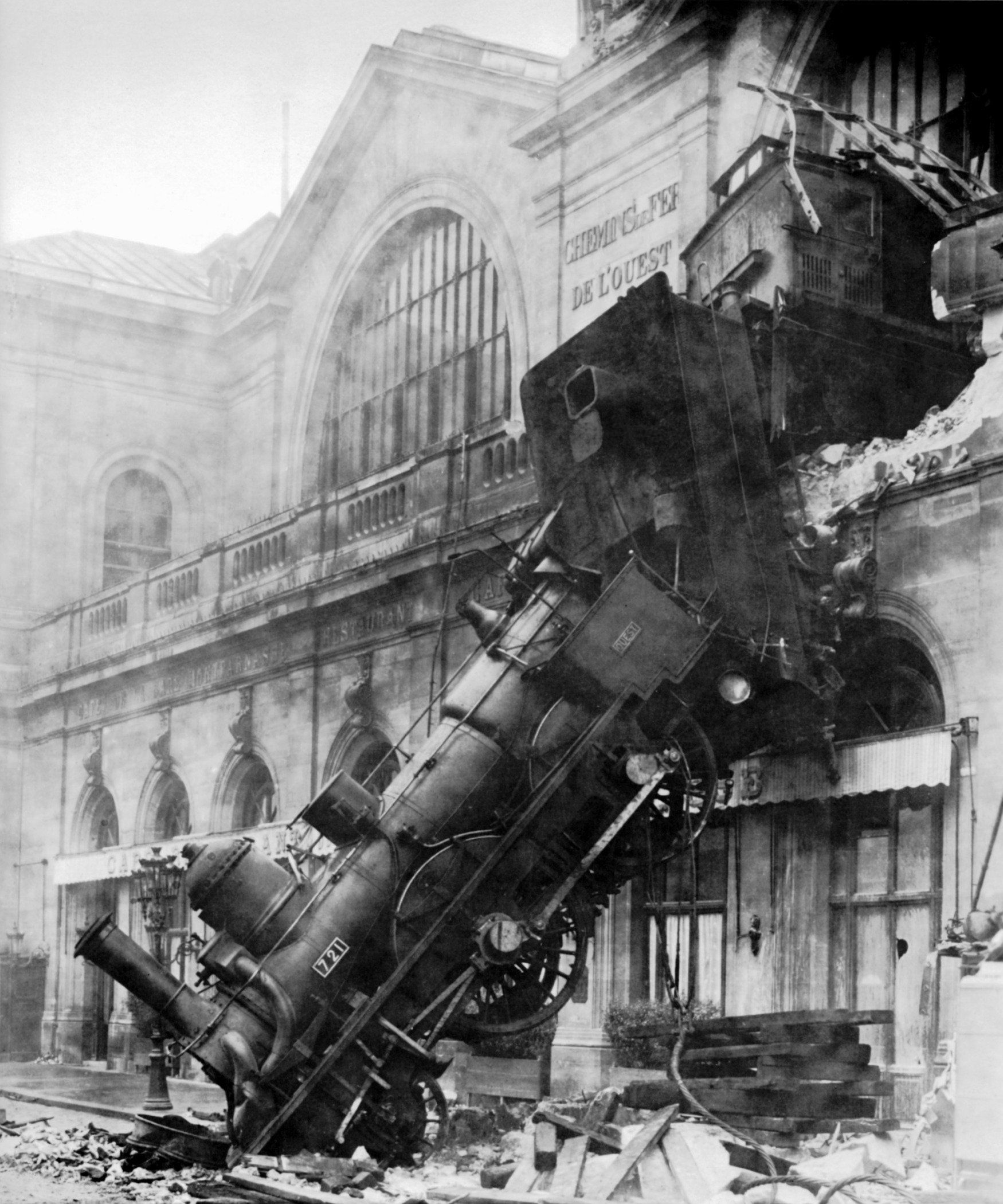
Wonderful thoughts about accidents found here and written by C. S, Lewis. If everything is an accident why should i believe it to be true?
We ought to recoil from any suggestion that these things came into being by accidental causes or natural processes.
C. S. Lewis wrote:
If the solar system was brought about by an accidental collision, then the appearance of organic life on this planet was also an accident, and the whole evolution of Man was an accident too. If so, then all our present thoughts are accidents—the accidental by–product of the movement of atoms. And this holds for the thoughts of the materialists and astronomers as well as for anyone else’s. But if their thoughts are merely accidental by–products, why should we believe them to be true? I see no reason for believing that one accident should be able to give me a correct account of all the other accidents.4
Elsewhere, Lewis wrote:
Each particular thought is valueless if it is the result of irrational causes. Obviously, then, the whole process of human thought, what we call Reason, is equally valueless if it is the result of irrational causes. Hence every theory of the universe which makes the human mind a result of irrational causes is inadmissible, for it would be a proof that there are no such things as proofs. Which is nonsense. But Naturalism, as commonly held, is precisely a theory of this sort.5
The only reasonable explanation for the stars and our solar system is what we read in Scripture: “God set them in the firmament of the heavens” (Genesis 1:17). Scripture says an understanding of this is actually inborn in every human heart: “because what may be known of God is manifest in them, for God has shown it to them” (Romans 1:19).
4 C. S. Lewis, God in the Dock (Grand Rapids; Eerdmans,1970), 52-53.
5 C. S. Lewis, Miracles(New York:MacMillan, 1947), 21.
John MacArthur, The Battle for the Beginning: The Bible on Creation and the Fall of Adam (Nashville, TN: W Pub. Group, 2001), 119–120.