Follow Me
The Word Paul Was Not Afraid to Use
I have been in ministry more than fifty years, and I have never once heard a preacher stand up and say, "Follow me."
We say "follow Christ." We say "look to Jesus." We would never point at ourselves. It feels arrogant. It feels like the kind of thing that gets a man in trouble.
Paul said it anyway.
"For yourselves know how ye ought to follow us: for we behaved not ourselves disorderly among you."
II Thessalonians 3:7
"Not because we have not power, but to make ourselves an ensample unto you to follow us."
II Thessalonians 3:9
"Wherefore I beseech you, be ye followers of me."
I Corinthians 4:16
"Be ye followers of me, even as I also am of Christ."
I Corinthians 11:1
He said it to the
Thessalonians. He said it to the
Corinthians, one of the most troubled churches he ever pastored. He said it plainly, repeatedly, without apology. If we want to raise up the kind of leaders Paul raised up, we need to understand why that word did not scare him, and why it scares us.
What the Word Actually Means
The Greek word behind "follow" and "followers" in these verses is not about walking a few steps behind someone. It comes from mimeomai, built on the word mimos, where we get our word mimic.
Follow me, in Paul's mouth, meant something closer to "copy me." Watch how I live, and do the same thing.
That should stop us for a second. We are comfortable telling people to admire a leader. We are far less comfortable asking them to mimic one. Admiration keeps a safe distance. Imitation gets close enough to see everything.
But notice what made it safe for Paul to say it. He never said it standing alone.
"Be ye followers of me, even as I also am of Christ."
I Corinthians 11:1
He was only asking people to copy what he himself was copying. He was not the source. He was a conduit. The confidence to say "follow me" only holds up when there is Someone better standing behind you.
He Was Not the Only One Who Said It
Paul was not inventing something strange. The whole New Testament assumes that following, in this imitating sense, is simply how faith gets passed from one generation to the next.
The Thessalonians became followers of Paul, and of the Lord, in the middle of real suffering.
"And ye became followers of us, and of the Lord, having received the word in much affliction, with joy of the Holy Ghost."
I Thessalonians 1:6
Hebrews tells believers not to be slothful, but to be followers of those who inherit the promises through faith and patience.
"That ye be not slothful, but followers of them who through faith and patience inherit the promises."
Hebrews 6:12
Peter plainly tells his readers to follow what is good.
"And who is he that will harm you, if ye be followers of that which is good?"
I Peter 3:13
Paul wasn't building a following around himself. It was the ordinary, expected way character travels. Somebody lives it first. Somebody else watches closely enough to catch it. That is how it has always worked, long before anyone wrote a book on leadership.
Churches Can Mimic Churches
Here is a verse that gets skipped over too often. The believers in Thessalonica did not only follow a man. They followed an entire church.
"For ye, brethren, became followers of the churches of God which in Judaea are in Christ Jesus: for ye also have suffered like things of your own countrymen, even as they have of the Jews."
I Thessalonians 2:14
A congregation, hundreds of miles away, in a different culture, patterned its life after churches most of its members had never even visited. That is worth sitting with if you have ever set foot on a mission field.
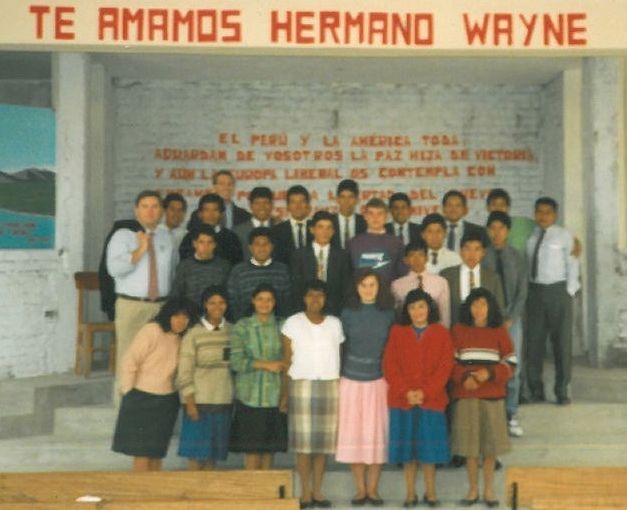
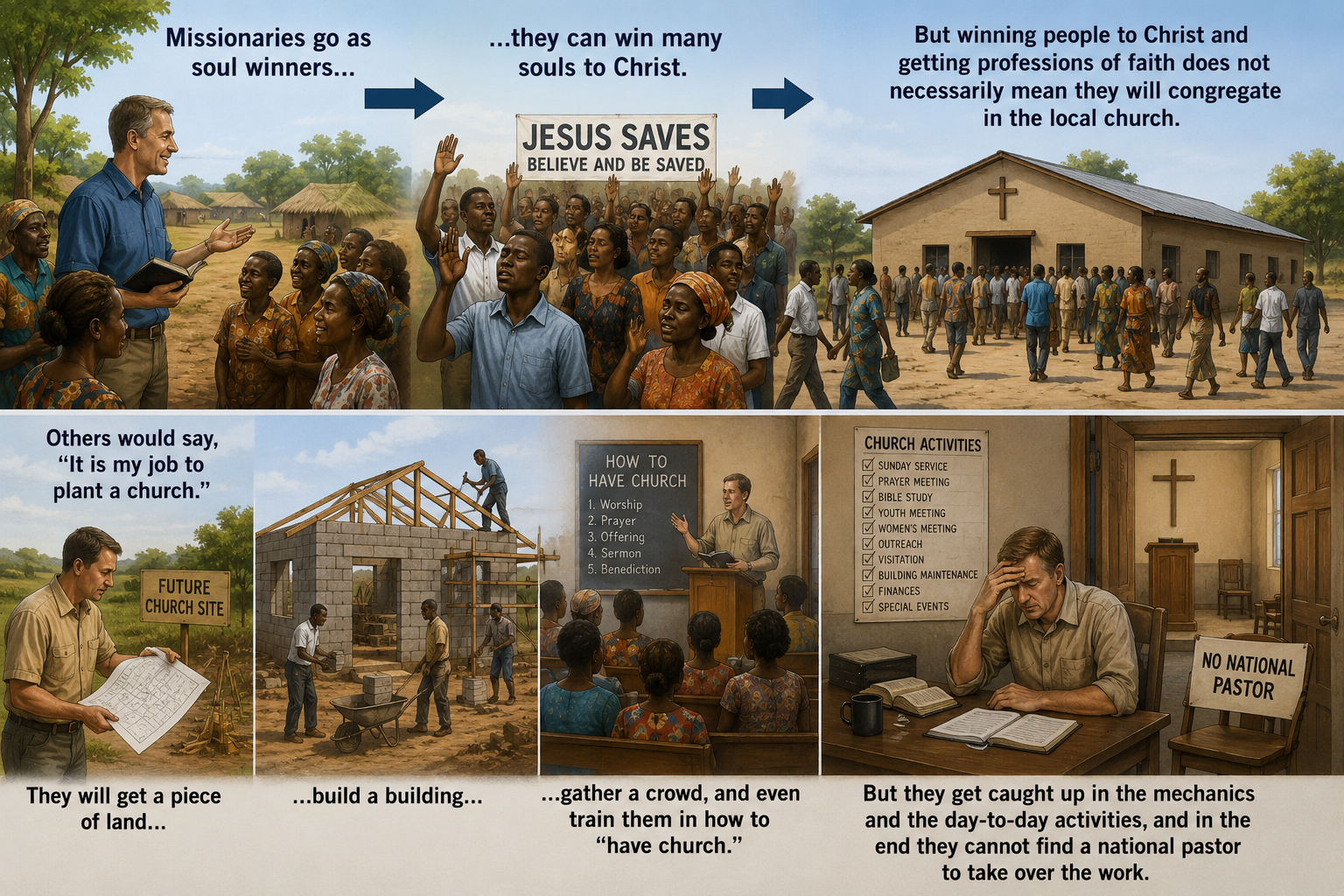
Our job overseas has never been to hand a young church an American building or an American style of music and call that faithfulness. That misses the point, and it usually does real damage to a church trying to find its own footing in its own culture. But some things are worth leaving behind on purpose. A church that goes soulwinning. A church that tithes. A church that prays, gives to missions, and carries the Great Commission as its own calling, not something the missionary does for them.
Handled with humility, that is not one culture imposing on another. It is simply leaving something worth copying, the same way Judea left something worth copying for a church in Thessalonica.
Timothy Was the Proof
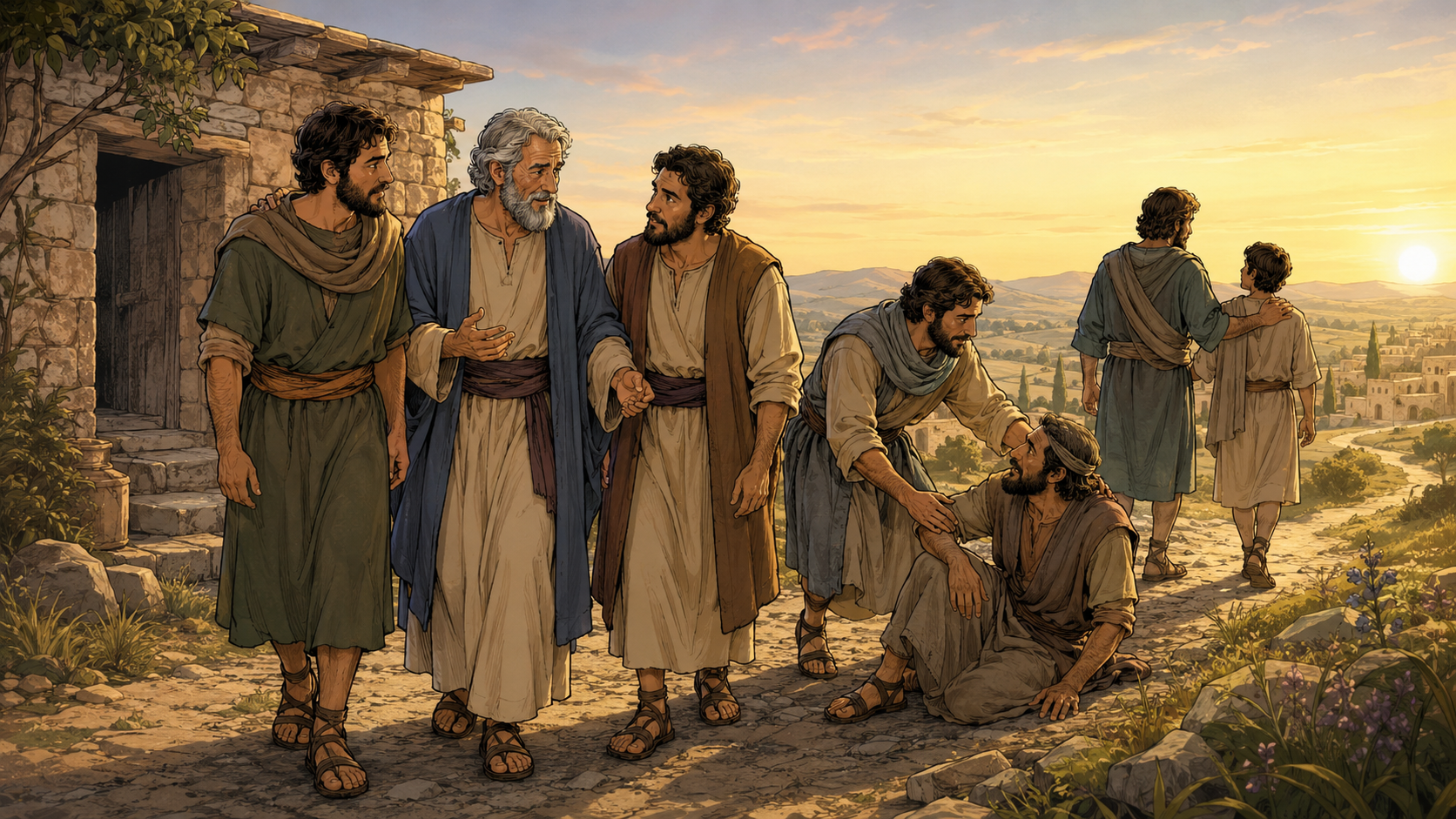
If you want to know whether Paul's method actually worked, look at Timothy.
Paul did not just tell Timothy to imitate him. He poured years into him, side by side, until the imitation had actually taken. He could send Timothy into a troubled church in Corinth and say this:
"For this cause have I sent unto you Timotheus, who is my beloved son, and faithful in the Lord, who shall bring you into remembrance of my ways which be in Christ, as I teach every where in every church."
I Corinthians 4:17
Think about that sentence. Paul was confident that when the Corinthians looked at Timothy, they would see him. Not because Timothy had memorized a script, but because he had actually caught something real. That is what discipleship produces when it is done right. Not a copy of personality, but a way of walking with Christ that becomes recognizable in somebody else's life.
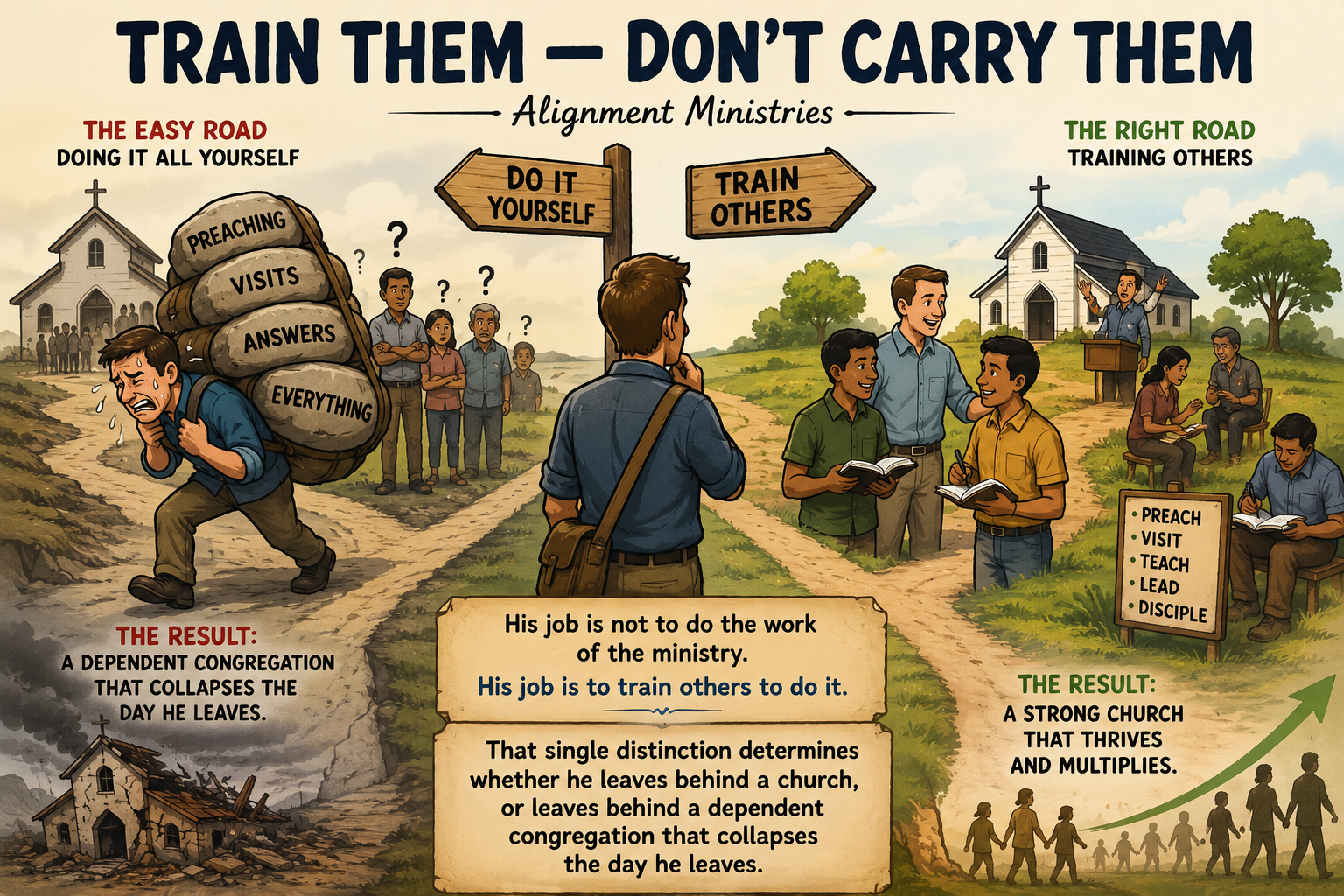
That is still the goal, whether you are training a staff member down the hall or a national pastor on a field who will carry the work long after you have gone home.
Follow, But Follow Rightly
None of this means every leader is safe to imitate, and Scripture never pretends otherwise.
"Beloved, follow not that which is evil, but that which is good. He that doeth good is of God: but he that doeth evil hath not seen God."
III John 1:11
Hebrews does not simply say follow your leaders. It says follow their faith, and it tells us how to check that: consider the end of their conversation, in other words, look at where the life actually led.
"Remember them which have the rule over you, who have spoken unto you the word of God: whose faith follow, considering the end of their conversation."
Hebrews 13:7
Character shows up over the long haul. A life worth mimicking is one you can watch for years, not just for a Sunday.
That is a good filter for you as a leader too. Somebody, right now, is watching you closely enough to copy you, whether you ever gave them permission to or not. A young pastor. A trainee on the field. Your own children. The question was never really whether people would follow you. They already are. The question is what they are catching.
Where Every Ensample Points
Paul was not shy about calling himself an ensample, a pattern for others to trace.
"Brethren, be followers together of me, and mark them which walk so as ye have us for an ensample."
Philippians 3:17
But he never let it stop with him. Every human ensample was meant to point past itself, further up the chain, until it reached the Father.
"Be ye therefore followers of God, as dear children."
Ephesians 5:1
That is the real destination. Not a room full of people trying to become Paul, or Timothy, or you. A family of dear children who have watched someone who watched someone who was watching Christ, until they finally recognize their own Father's face.
The Reason Paul Was Not Afraid
I think I finally understand why Paul could say "follow me" without it sounding like pride.
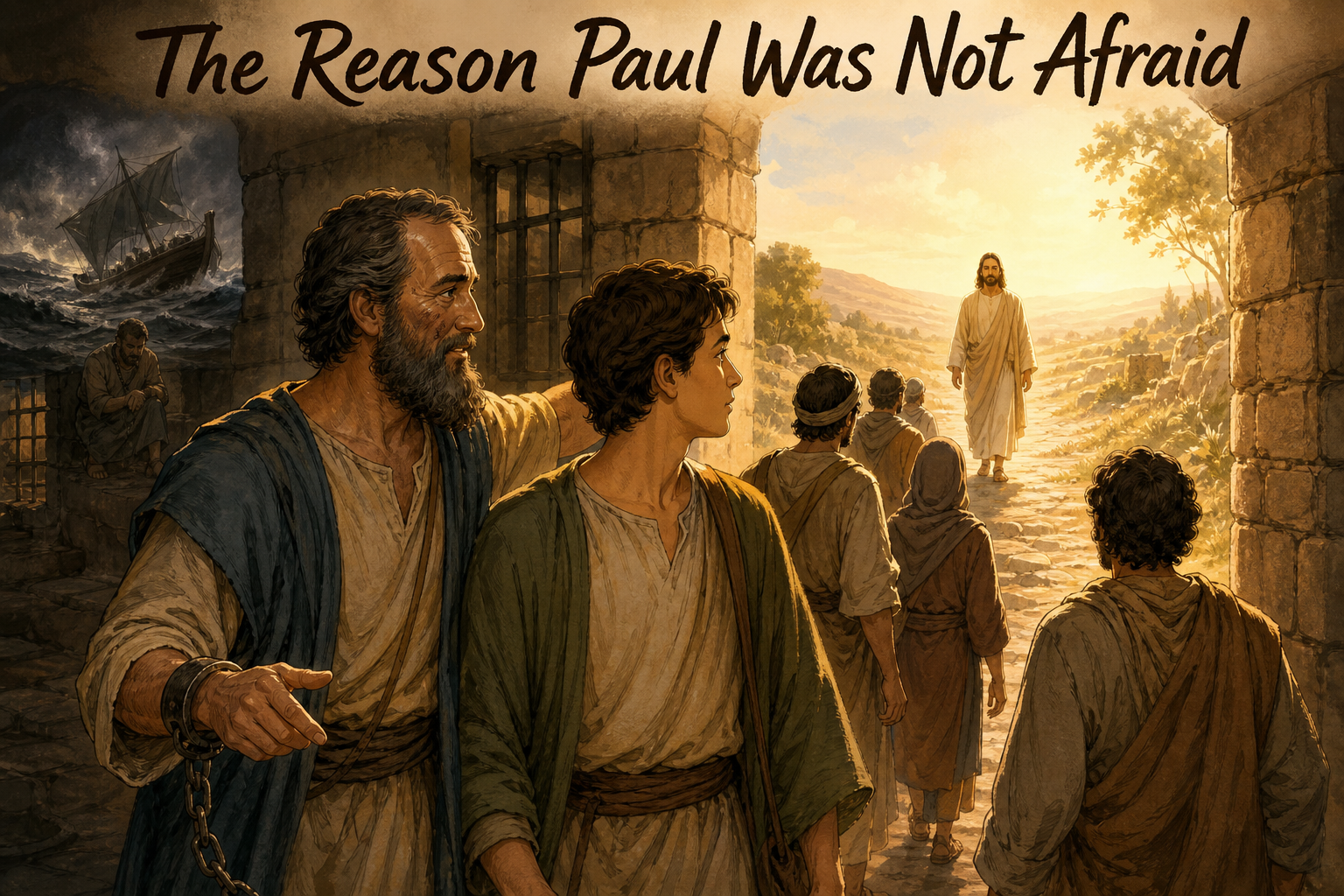
He was not asking anyone to admire him. He was asking them to watch Christ live an actual human life through him, in the middle of shipwrecks and beatings and prison cells, and then let that same Christ live through them too. Take Christ out of the center of it, and "follow me" is arrogance. Keep Him at the center, and it becomes one of the most ordinary things in the world: one believer helping another believer see what grace looks like with skin on.
That is still how faith gets handed down. Not mainly through better sermons or better programs, good as those can be, but through someone close enough to watch, and worth watching. Paul was willing to be that for Timothy. Judea was willing to be that for Thessalonica. Somewhere, right now, God is asking you to be that for someone too.
You do not need to have it all figured out to say it. Paul did not either. He simply lived close enough to Christ that when people copied him, they ended up closer to Jesus than when they started. That is the whole aim. Not more people impressed with you. More dear children who look a little more like their Father.