He Never Tried to Reach Everybody
He Aimed at the Cities That Mattered Most
There's a difference between being busy for God and being useful to Him. Most of us never stop long enough to notice which one we're actually doing.
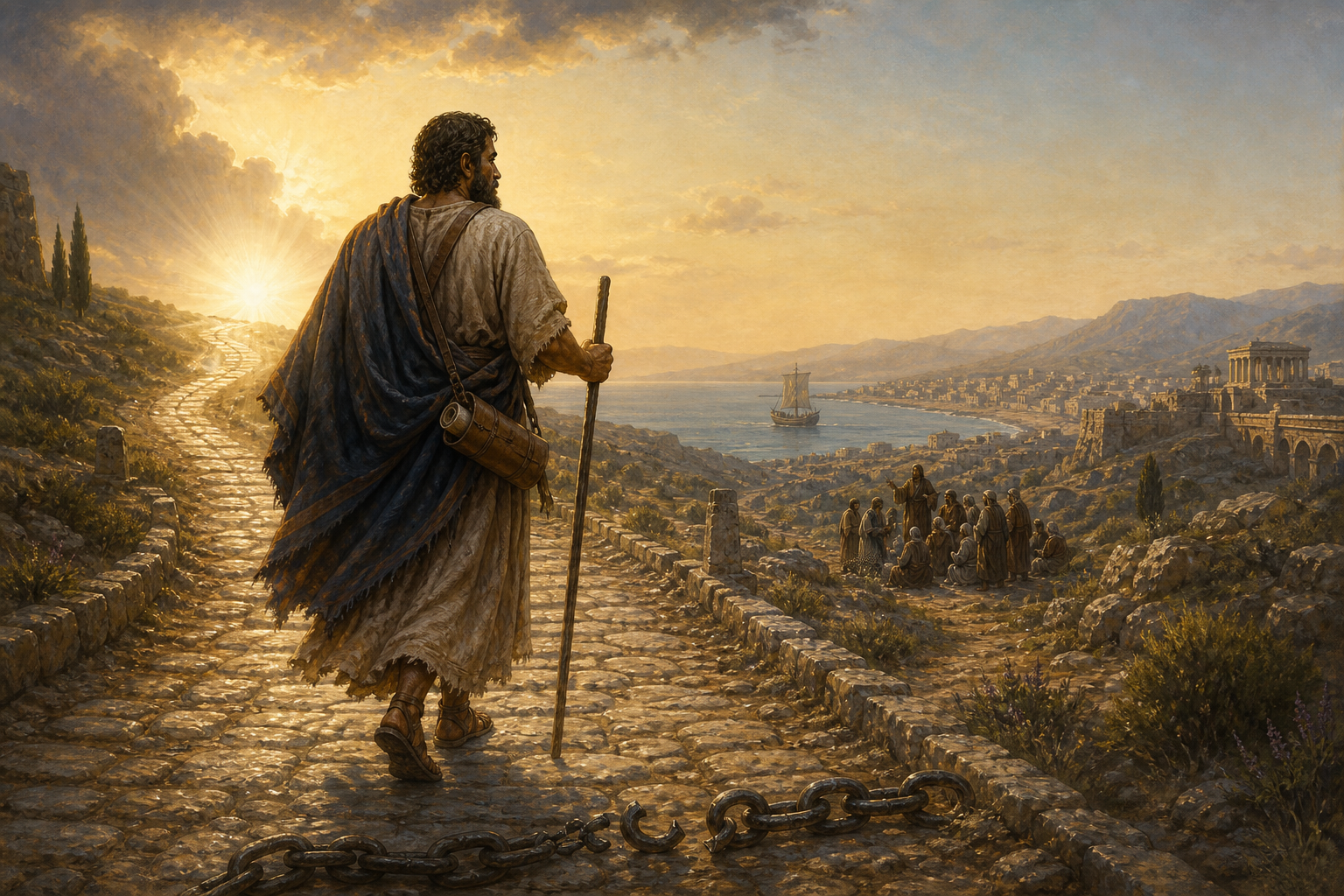
One of the clearest strategists in the New Testament wasn't loud about his method. He never wrote a manual. But if you follow his footsteps through the book of Acts, a pattern shows up again and again. It's simple enough to write on an index card, and it still works today.
He Aimed at the Cities That Mattered Most
When this traveling church planter moved through Macedonia, he didn't wander from village to village hoping something would stick. Scripture tells us plainly where he landed:
"which is the chief city of that part of Macedonia" (Acts 16:12).
That wasn't an accident. A city like that had roads running out of it in every direction. Reach the hub, and the message had a way of traveling to the smaller towns on its own. He wasn't chasing numbers. He was thinking about reach.
You don't have unlimited time, and neither did he. Every one of us has to decide where our life is going to be spent. Some ground simply carries further than other ground. That's not favoritism. That's wisdom.
Closed Doors Aren't Always Bad News
Here's something that surprises people: this man didn't preach everywhere he traveled. He passed through region after region and said almost nothing, because there was no open door.
"Withal praying also for us, that God would open unto us a door of utterance, to speak the mystery of Christ" (Colossians 4:3-4).
He asked people to pray for that door. He didn't assume he could force it open on his own.
Acts 16 captures this best. He tried to go into Asia, and the Holy Ghost stopped him. He tried Bithynia next, and the Spirit wouldn't allow that either. Only after both doors closed did he see the vision of a man from Macedonia, calling him across the sea (Acts 16:6-10).
If you've ever had a door slam shut on something you were sure was God's plan, you're in good company. A closed door isn't proof that you missed Him. Sometimes it's proof that He's steering.
The One Thing He Refused to Get Distracted From
His calling was narrow, and he guarded it fiercely: preaching, teaching, and planting churches that could stand without him. He didn't try to do every good thing available to him. He did the thing he was sent to do.
That's worth sitting with. There is no shortage of good ministries a person could pour their life into. Good is not always the same as yours. Getting pulled sideways into ten decent things can quietly rob you of the one thing you were actually called to finish.
He asked for something simple from the churches he loved:
"pray for us, that the word of the Lord may have free course, and be glorified" (II Thessalonians 3:1-2).
Not that his name would spread. That the word would run.
He lived like a man who understood the days were short and the work was real. Not frantic. Not driven by fear. Just clear about what mattered and unwilling to let anything crowd it out.
He Spent His Life on a Few Men
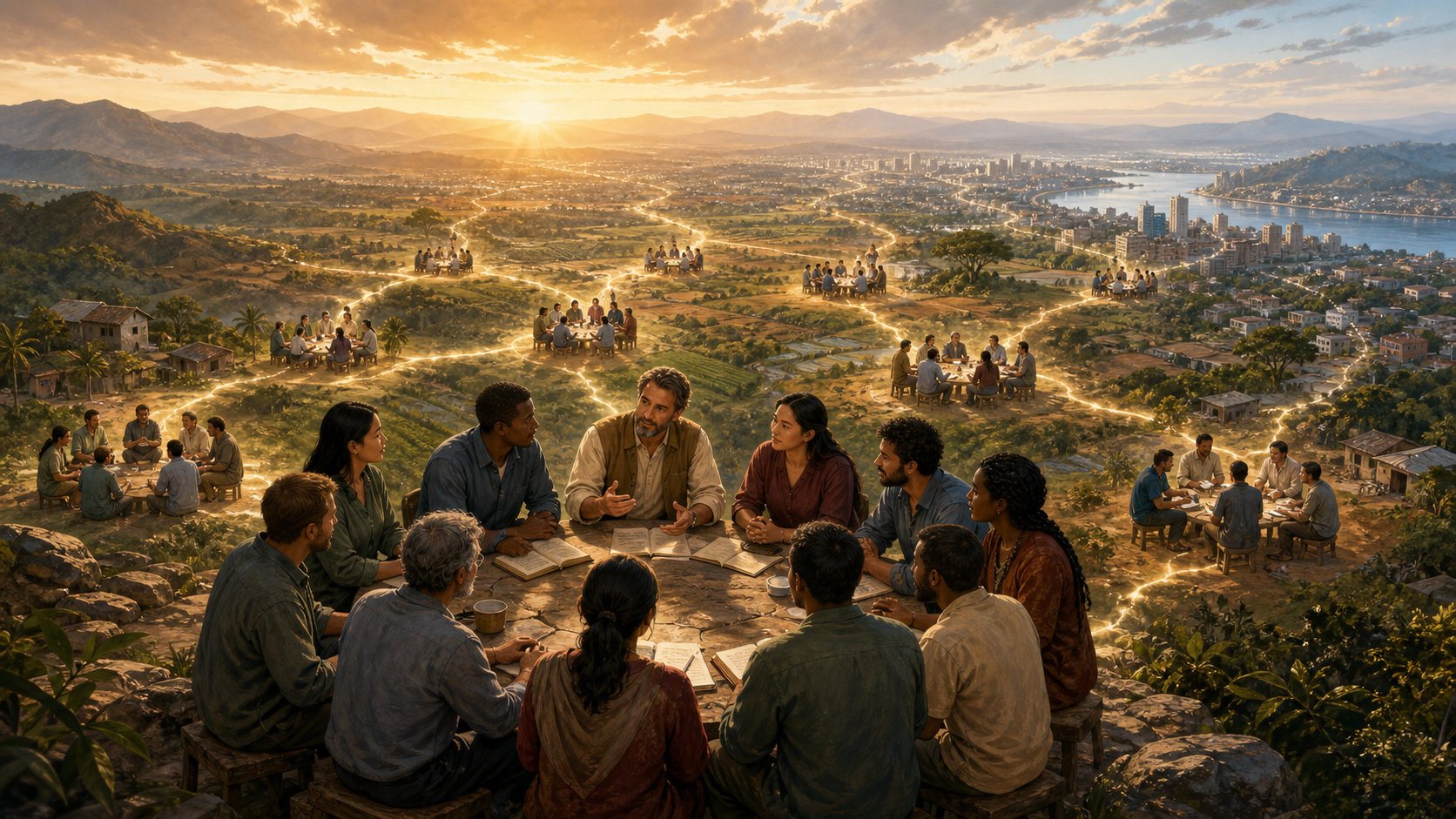
If you want to know what this missionary actually valued, look at where he invested his hours. He didn't try to reach every soul in the Roman world personally. He gathered a handful of men and poured everything he had into them.
"The things that thou hast heard of me among many witnesses, the same commit thou to faithful men, who shall be able to teach others also" (II Timothy 2:2).
Notice the shape of that sentence. It doesn't stop at one generation. He was training men who would go on to train other men.
In Ephesus, he spent two years teaching daily in a lecture hall, and Scripture says the result was that
"all they which dwelt in Asia heard the word of the Lord Jesus" (Acts 19:8-10).
He didn't travel to every town in Asia. He trained leaders who did.
Think about what that means for your own life. You will never personally reach everyone God loves. But you can pour your life into a few people who will reach further than you ever could alone.
He Left Before Everything Was Finished
Here's a piece of his method that trips a lot of us up. He didn't wait until a church was polished and problem-free to move on. He planted, he taught what he could in the time he had, and then he left before everything was settled.
"For this cause left I thee in Crete, that thou shouldest set in order the things that are wanting, and ordain elders in every city" (Titus 1:5).
Things wanting. Loose ends. He left them there on purpose, trusting someone else to finish what he'd started.
That didn't mean he stopped caring. He wrote letters to untangle problems he couldn't be present for. He sent trusted men to check on churches he couldn't visit. He prayed for people he might never see again. And sometimes, when it mattered enough, he went back himself.
If you're waiting for a situation to be fully in order before you'll act, you may be waiting on something that was never meant to arrive. Perfect timing wasn't his method. Faithful follow-through was.
He Trusted Someone Bigger Than Himself to Finish It
This is where his whole approach rests, and it's what turns a strategy into something you can actually live with. He never carried the churches he planted like they depended on him alone.
"Being confident of this very thing, that he which hath begun a good work in you will perform it until the day of Jesus Christ" (Philippians 1:6).
Confident. Not anxious. Not lying awake wondering if it would all fall apart the moment he left town.
When he finally said goodbye to the elders at Ephesus, not knowing if he'd see their faces again, he didn't leave them a checklist. He left them a Person.
"I commend you to God, and to the word of his grace, which is able to build you up" (Acts 20:32-38).
He wept with them. He'd given them everything he had. And then he handed them, not to a system, but to grace.
What This Means for You
You are not responsible for reaching everyone. You don't have to say yes to every good door. You don't have to wait until your circumstances are tidy before you take a step.
You get to ask where the roads run. You get to wait for the door instead of forcing one. You get to stay narrow enough to actually finish what you started. You get to pour your life into a few faithful people instead of spreading yourself thin trying to reach a multitude alone.
And when you've done what you could, and it's time to leave something unfinished in someone else's hands, you can do what he did. Not white-knuckle it. Not carry the weight like it all rides on you.
Commend it to God, and to the word of his grace. He can build it up. He began the good work, and he's the one who finishes it, not just in the people you've poured into, but in you.