Potential: Hundredfold Men
What God Sees When He Looks at One Faithful Life

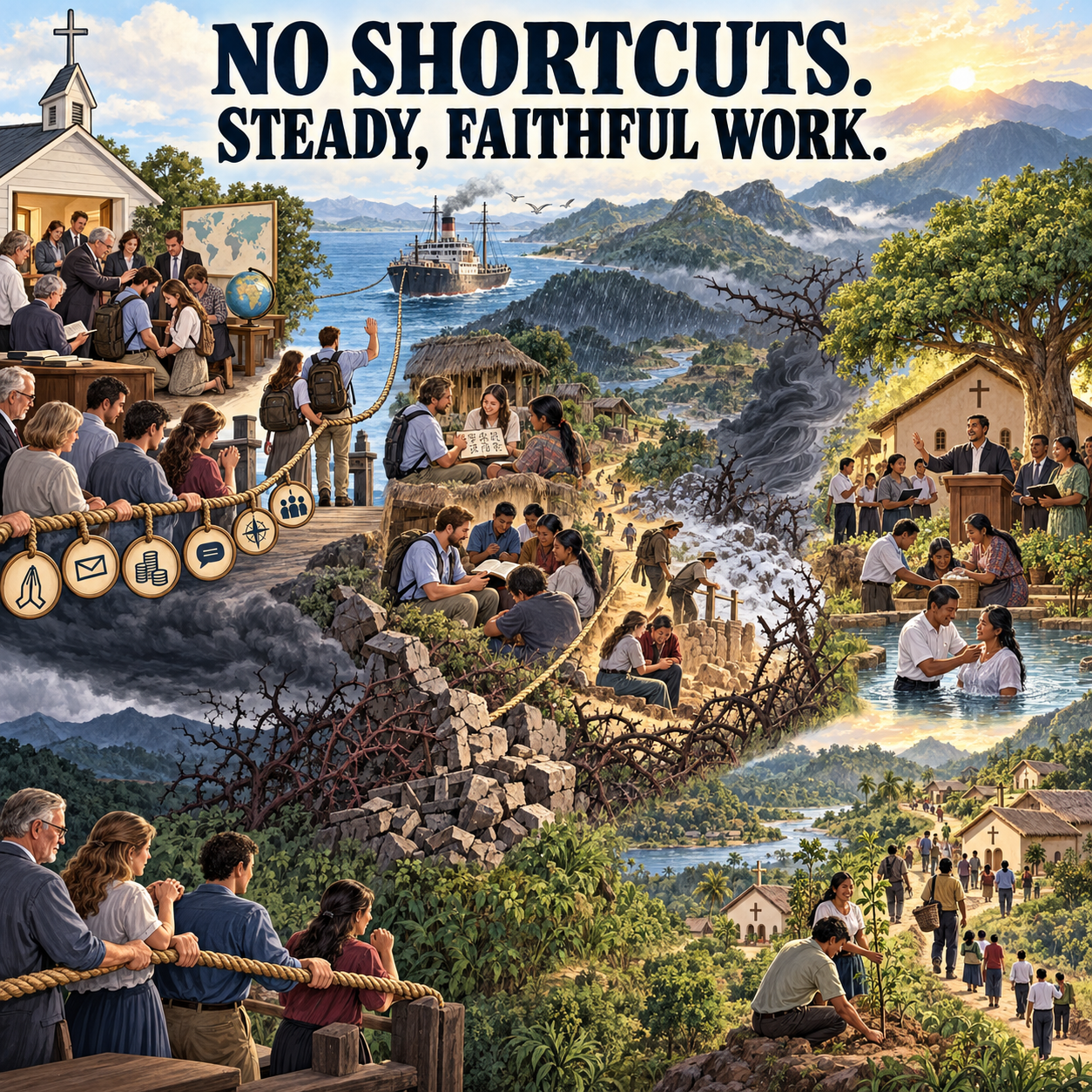
Jesus told a story about seed and soil, and tucked inside that story is a number most of us read past too quickly. He said the seed that fell on good ground brought forth fruit, some thirtyfold, some sixty, some a hundred. We nod at the parable, we talk about good soil and bad soil, and we move on to the next verse. But stop for a moment. Jesus just told you that the same seed, planted in the same field, by the same Sower, can yield drastically different results depending on what happens in the soil. He was not just talking about how people hear the Word. He was talking about potential. Yours.
Every pastor reading this has felt the tension between two competing fears. The first fear is pride, the worry that wanting more fruit means wanting more glory for yourself. The second fear is wasted potential, the quiet dread that you have spent decades being faithful in small things while the harvest God intended through your life never fully came in. This article is not going to resolve that tension by picking a side. It is going to resolve it by showing you what hundredfold fruitfulness actually looks like in the Kingdom, and why it was never about you in the first place.
The Biblical Basis for Hundredfold Thinking
Scripture does not leave the idea of multiplied fruitfulness to guesswork. From the parable of the sower to the parable of the talents to Paul’s own testimony, the Bible builds a consistent case that God intends ordinary obedience to produce extraordinary, compounding results.
The Parable of the Sower: Matthew 13:23
But he that received seed into the good ground is he that heareth the word, and understandeth it; which also beareth fruit, and bringeth forth, some an hundredfold, some sixty, some thirty. Matthew 13:23
Notice what Jesus does not say. He does not say the hundredfold man worked harder than the thirtyfold man, or prayed a more impressive prayer, or had more natural talent. He says the difference is in the soil, the heart that hears and understands. Fruitfulness, in this parable, is fundamentally about receptivity. The hundredfold man is not a superhuman. He is simply a man whose heart has been broken up, cleared of stones, and weeded of thorns so the Word can take deep root.
Mark’s Witness: Mark 4:8
And other fell on good ground, and did yield fruit that sprang up and increased; and brought forth, some thirty, and some sixty, and some an hundred. Mark 4:8
Mark adds a detail Matthew leaves out. He says the fruit sprang up and increased. That is the language of process, not a single event. Hundredfold fruit is not produced in a moment of dramatic consecration. It increases. It compounds over years of faithfulness, the way a seed planted in good soil does not leap to harvest overnight but grows by degrees you can hardly see from week to week.
The Parable of the Talents: Matthew 25:15
And unto one he gave five talents, to another two, and to another one; to every man according to his several ability; and straightway took his journey. Matthew 25:15
Here is the second half of the picture. The sower parable tells you fruitfulness depends on the condition of the soil. The talents parable tells you the Master entrusts differing measures according to his several ability. God is not asking the one-talent man to produce what the five-talent man produces. He is asking every man to be faithful with what he was given, and trusting the multiplication to Himself. The servant who buried his talent was not condemned for producing less than the others. He was condemned for producing nothing at all.
Paul’s Testimony: I Corinthians 15:10
But by the grace of God I am what I am: and his grace which was bestowed upon me was not in vain; but I laboured more abundantly than they all: yet not I, but the grace of God which was with me. I Corinthians 15:10
Read that verse slowly. Paul says he labored more abundantly than all the other apostles, and in the very same breath he says it was not him at all, but the grace of God working through him. That is the hundredfold man’s testimony in one sentence. He will, in fact, produce more. He will plant more, train more, and see more fruit than most. And he will be the last man in the room to take credit for it, because he knows exactly where the increase came from.
The Mathematics of Compounding Faithfulness
Here is a question worth sitting with. Would you rather have one thousand dollars a day for thirty days, or a single penny doubled every day for thirty days? Most men take the thousand dollars without thinking twice. At the end of thirty days, that choice nets thirty thousand dollars, which sounds like a fortune until you do the other math.
The penny, doubled daily, crosses five dollars by day ten and one thousand dollars by day twenty. It does not look impressive for most of the month. A man watching that penny grow for the first two weeks would conclude it was the worst deal by far. But by day thirty, that single penny, doubled every day, has become over five million dollars.
This is not a financial trick. It is how God’s Kingdom actually works, and it is why most of us misjudge fruitfulness so badly. Addition looks better in the short run. Multiplication looks unimpressive at first and then becomes unstoppable. The hundredfold man is the man who chooses the penny. He invests in something small and unimpressive, often invisible to everyone watching, and trusts that the doubling principle built into God’s Kingdom will do what addition never could.
The Ministry of God’s Gifted People
If hundredfold fruit comes through multiplication rather than addition, the next question is obvious. Multiplication of what, exactly? Scripture answers plainly. It is the multiplication of people, specifically faithful men and women equipped to do what you do and pass it on again.
The Pattern of Four Generations: II Timothy 2:2
And the things that thou hast heard of me among many witnesses, the same commit thou to faithful men, who shall be able to teach others also. II Timothy 2:2
Count the generations in that single verse. Paul taught Timothy. Timothy commits it to faithful men. Those faithful men teach others also. That is four generations of ministry living inside one sentence from a man writing in chains. Paul did not ask Timothy to remember good sermons. He asked him to reproduce a ministry that would keep reproducing long after both of them were gone.
This is the difference between a teacher and a trainer. A teacher gives you information. A trainer gives you something you can give to someone else. Paul was always a trainer. That is why his ministry did not die with him in a Roman prison cell. It is still multiplying today, two thousand years and untold generations later, every time a faithful man commits the gospel to another faithful man who will teach others also.
Gifted, Equipped, Built Up: Ephesians 4:1-16
And he gave some, apostles; and some, prophets; and some, evangelists; and some, pastors and teachers; for the perfecting of the saints, for the work of the ministry, for the edifying of the body of Christ. Ephesians 4:11-12
Read the purpose clause carefully. Christ did not give gifted leaders to the church so they could personally do all the ministry. He gave them for the perfecting of the saints, for the work of the ministry. The gifted leader’s job is to equip others to do the work, not to be the only one doing it. A pastor who never trains anyone else to minister has misunderstood his own gift. He may be faithful, he may be busy, he may even be effective in the short term, but he has built a ministry that cannot outlive him.
Paul describes the result of this kind of equipping ministry as a body that grows and maketh increase of itself through every joint and member doing its part. That phrase alone should reorder how you think about your own ministry. Increase that comes through one man working alone is addition. Increase that comes through every joint and member doing its part is multiplication, and it is the only kind of growth Ephesians 4 describes as healthy.
One Man, A Hundred Leaders, and the Leaders They Will Train
Now put the two halves of this article together. The sower parable tells you a man with good soil can produce a hundredfold. The Ephesians pattern shows that this happens by equipping others for the work of the ministry. So what does hundredfold actually look like in flesh and blood, in a pastor’s study or a missionary’s living room?
Consider the potential sitting inside one obedient life. One man trains one hundred leaders of leaders. Those one hundred each train another hundred leaders of leaders. You do not need a calculator to see what happens to that number. It does not grow by addition. It explodes by multiplication, the same penny doubling day after day until what began as one quiet, faithful investment becomes a harvest no single man could have produced by his own labor in ten lifetimes.
A Necessary Word of Caution
Here the flesh wants to grab hold of that number and turn it into a goal. Do not let it. We are not going to set out to train one hundred leaders of leaders as our target. The moment multiplication becomes a target, it curdles into ambition wearing a spiritual costume, and ambition always ends up serving itself no matter how good the math looked at the start.
The hundredfold harvest was never the goal in the sower parable either. The goal was good soil, a heart that heard and understood. The harvest was simply what good soil produces. In the same way, training leaders of leaders cannot be our ambition. It will be the result of our ministry, the natural fruit of faithfully discipling the people God puts in front of us and equipping them to do the same for others. Aim at faithfulness. Let God aim the harvest.
The Hidden Math Behind Every Hundredfold Man
There is a quiet promise buried in this principle that deserves to be said plainly, because it will encourage every pastor who has ever felt like the work was too slow or too small. As we train hundredfold men, something happens automatically that we never planned and never had to engineer.
We will, without any extra effort, train twice as many sixtyfold men. And we will train four times as many thirtyfold men. This is simply how the parable’s own ratios play out across a body of people. Not every man in your church or on your field is wired or positioned to be a hundredfold leader of leaders, and that was never the expectation. Some will be sixtyfold. Some will be thirtyfold. All of it is fruit. All of it came from the same good seed planted in good soil.
This should free you from a temptation that quietly poisons many ministries, the temptation to only invest in the most obviously gifted, the ones who look like future hundredfold men from the very first conversation. Train the man in front of you. Disciple the woman who shows up faithfully but does not seem destined for a platform. Some of what you plant will yield thirty. Some will yield sixty. And some, by grace and not by your own skill at picking winners, will yield a hundred, and then train a hundred more who do the same.
Audience of One
Here is the truth that should settle every pastor’s heart on this subject. You do not have to manufacture hundredfold fruit. You cannot, in fact, manufacture it at all. Paul said it plainly: I labored more abundantly than they all, yet not I, but the grace of God which was with me. Your job is the soil. God’s job is the increase.
So plant. Disciple the one man God has given you this season. Commit what you have heard to faithful men who will teach others also. Do not chase the number. Chase faithfulness, in front of an Audience of One, and let Him decide whether the seed you planted comes back thirty, sixty, or a hundredfold. He has never once been stingy with the harvest of a faithful life.
Frequently Asked Questions
Does hundredfold fruitfulness mean some Christians are simply more valuable than others?
No. The parable measures fruit, not worth. A thirtyfold man and a hundredfold man are equally loved, equally saved by grace, and equally precious to the Father. The difference in yield says nothing about the value of the person and everything about the condition of the soil and the season of growth.
Isn’t it prideful to want to be a hundredfold man?
Wanting fruitfulness is not the same as wanting glory. Paul wanted abundant labor and gave God all the credit in the same breath. The danger is not desiring fruit. The danger is forgetting whose grace produced it.
How do I know if I am sowing into good soil or bad soil in my own ministry?
Look for hearts that hear the Word and understand it, the very description Jesus gives of good ground in Matthew 13:23. Receptivity and understanding matter more than charisma or talent when you are choosing who to invest deeply in.
Should every leader specifically aim to train one hundred leaders of leaders?
No. That number should never become a target you chase. Aim at faithful discipleship of the people in front of you. Multiplication of leaders of leaders is the fruit of that faithfulness, not a goal to be engineered.
What if the men and women I disciple only produce thirtyfold or sixtyfold results?
Every measure named in the parable is still fruit. As you train hundredfold men, you will automatically train more sixtyfold men and even more thirtyfold men. All of it counts. None of it is wasted.
#HundredfoldMen #DiscipleshipMultiplication #LeadersOfLeaders #AudienceOfOne #FollowedByMercy #IITimothy2_2 #FaithfulMenWhoTeachOthers #AlignmentMinistries