Trying to Do Everything on Your Own
Build a Team of National Leaders, Not a Divide
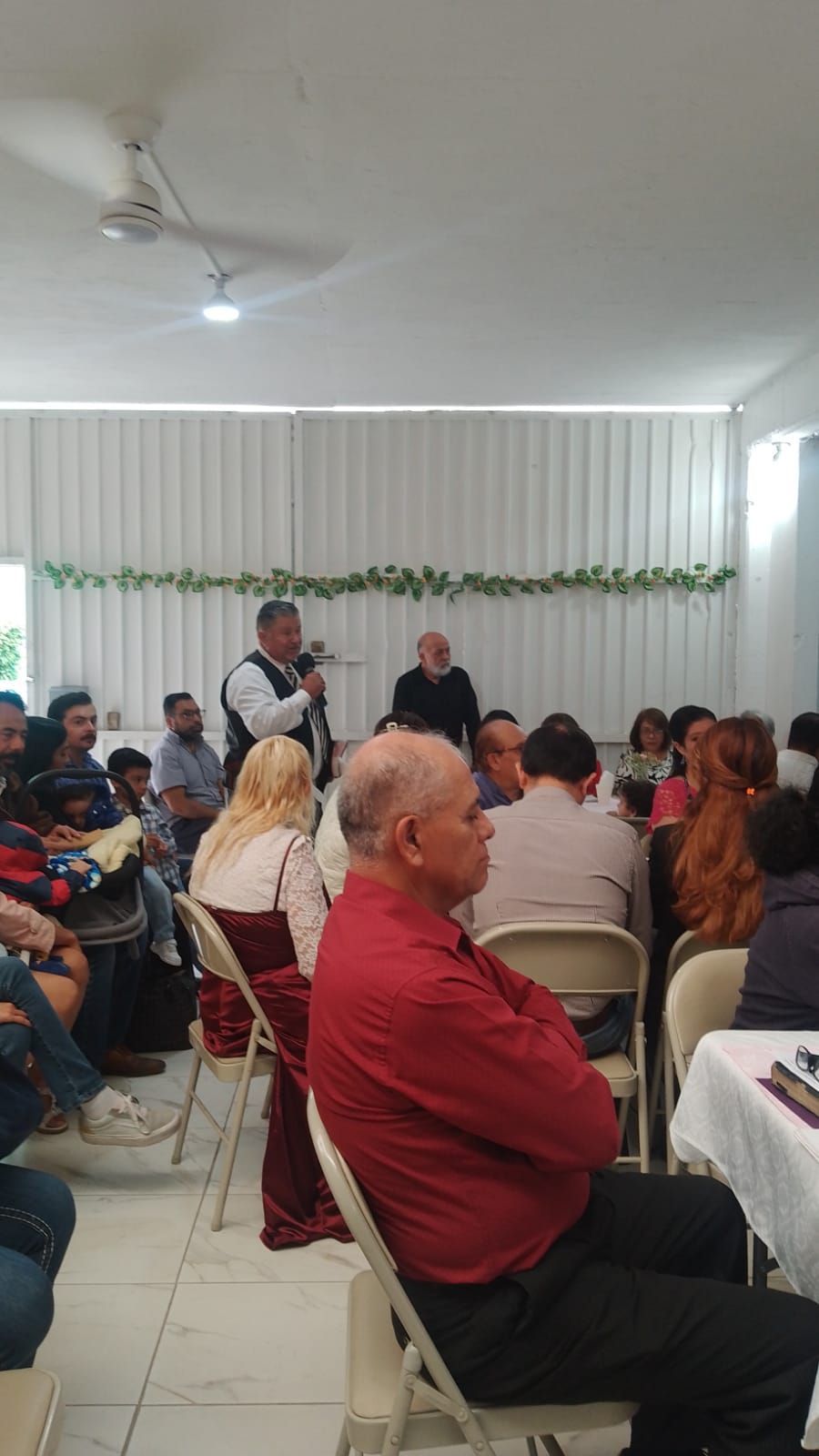
The Mistake
The mistake is trying to do everything on your own.
It is a lonely mistake, and it is a common one. A missionary arrives in a new place, and he starts to work. He preaches. He teaches. He visits. He counsels. He handles the money. He makes the decisions. He does it all, because no one else is there to do it, and because doing it himself feels faster and safer than teaching someone else to do it.
After a while, the work grows, and he grows tired. He is the only preacher. He is the only teacher. He is the only one who knows where the money is. He is the only one the people call when there is trouble. He has built a ministry around himself, and he does not know how to get out of it.
The solution is not to work harder. The solution is to build a team. Not a team of helpers who do what the missionary tells them. A team of national leaders, men from that very place, who carry the work with him as equals before the Lord.
And here is the point that matters most. It must be one team. Not them and us. Not the missionary on one side and the nationals on the other. One team, of national leaders, with the missionary as a fellow worker among them, until the day he leaves and the team goes on without him, because it was always their team.
Why We Do It Alone
A missionary does not set out to be alone. It happens for reasons that sound good at first.
It is faster to do it himself. Teaching a young man to preach takes time. The sermon is easier to write alone than to coach a man through his first one. The visit is quicker without a trainee tagging along. So he does it himself, and he tells himself he will train someone later. Later never comes.
He does not trust anyone yet. The believers are new. They are young in the faith. He is afraid they will get it wrong, say the wrong thing, make a mess of it. So he holds the work tight. What he calls protecting the work is really controlling it.
He likes being needed. That is a hard truth to say, but it is true. When you are the only man who can do everything, you are important. People need you. They call you. They thank you. If you train others to do the work, you are no longer the only one. Some men are afraid of that. They are afraid of becoming unnecessary.
And sometimes the divide grows without anyone meaning it to. The missionary lives in one house, and the nationals live in another. He speaks the language with an accent, and they speak it as their own. He has money from home, and they do not. He makes the decisions, and they carry them out. Before long there are two groups: us and them. The missionary and the nationals. And a church built on that divide will never be one body.
One Team, Not Them and Us
The answer is to build a team of national leaders from the very beginning, and to build it as one team.
That means the missionary is not the boss, and the nationals are not his staff. They are fellow workers, laborers together with God. Paul said,
"For we are labourers together with God: ye are God's husbandry, ye are God's building." 1 Corinthians 3:9.
Labourers together. Not one man and his helpers. Fellow workers, side by side, in the same field, building the same building, for the same Lord.
It means decisions are made together. The missionary does not decide alone in his study and then
announce it on Sunday. He sits with the national leaders, opens the Word with them, prays with them, and they decide together what the church should do. They may decide differently than he would have decided alone. That is good. They know their people. They know their town. They will still be there when he is gone.
It means the work is shared, not handed down. A national leader does not only visit the sick because the missionary told him to. He visits the sick because he is a leader of that church, and the sick are his people. He does not only preach when the missionary is away. He preaches because God has called him to preach, and the church has recognized it.
It means the missionary learns from them, as much as they learn from him. He knows the Bible. They know the people. He knows doctrine. They know the customs, the language, the way a man's heart works in that place. A team that only learns one way is not a team. It is a classroom, and the missionary is the only teacher.
When a team is built this way, there is no them and us. There is only us, the church in that place, serving the Lord together.
Two Are Better Than One
The preacher said it plainly.
"Two are better than one; because they have a good reward for their labour. For if they fall, the one will lift up his fellow: but woe to him that is alone when he falleth; for he hath not another to help him up. Again, if two lie together, then they have heat: but how can one be warm alone? And if one prevail against him, two shall withstand him; and a threefold cord is not quickly broken." Ecclesiastes 4:9-12.
Two are better than one. A man alone falls, and no one lifts him up. A man alone grows cold, and no one warms him. A man alone is overpowered, and no one stands with him.
A missionary alone on the field knows all of this by experience. He falls, and no one is there. He grows weary, and no one encourages him. He faces opposition, and he faces it alone. That is not the way God meant the work to be done.
Jesus sent His disciples out two by two.
"And he called unto him the twelve, and began to send them forth by two and two." Mark 6:7.
Not one by one. Two by two. Even the Son of God did not send His men out alone.
Paul never traveled alone either. He had Barnabas, and Silas, and Timothy, and Luke, and a host of others. And in Antioch, the church that sent Paul out was itself led by a team.
"Now there were in the church that was at Antioch certain prophets and teachers; as Barnabas, and Simeon that was called Niger, and Lucius of Cyrene, and Manaen, which had been brought up with Herod the tetrarch, and Saul." Acts 13:1.
Look at that team. Barnabas from Cyprus. Simeon called Niger, a black man. Lucius from Cyrene in Africa. Manaen, who grew up with Herod. Saul, a Pharisee from Tarsus. Different lands. Different backgrounds. Different races. One team, praying and fasting together, and the Holy Ghost said, separate me Barnabas and Saul for the work. The missionary movement began with a team, not with a lone man.
The Body Has Many Members
Paul gives us the picture that holds it all together.
"For as the body is one, and hath many members, and all the members of that one body, being many, are one body: so also is Christ." 1 Corinthians 12:12.
A body is one, and it has many members. The eye cannot say to the hand, I have no need of thee. The head cannot say to the feet, I have no need of you. Every member is needed, and every member belongs.
That is what a team of national leaders looks like. The missionary is one member. The national leaders are other members. None of them is the whole body. All of them are needed. The missionary cannot say to the national leaders, I have no need of you. And they cannot say to him, we have no need of you. They need each other, because Christ made them one body.
When a missionary tries to do everything on his own, he is acting like a body with only one member. An eye, trying to be a hand, and a foot, and an ear, all at once. It cannot work. And it was never meant to.
How to Build the Team
So how does a missionary build this team, in real life?
Start on the first day. Do not wait until the church is big, or until you are tired, or until you are ready to leave. The day you arrive, look for the men God has already prepared. They are there. They may be young in the faith, but they are faithful. Start with them.
Take them with you. When you visit, take a young man with you. Let him watch. Let him listen. Let him pray. When you preach, let him sit close, and talk with him afterwards about what you preached and why. When you counsel, let him sit in, and learn how to listen and how to point a hurting person to the Word.
Give them real work, not just tasks. There is a difference. A task is something you assign and then take back. Real work is something you entrust and then let go. Let a national leader preach, and let him preach his own sermon, not yours. Let him lead the meeting, and make the decisions, and live with the results. He will make mistakes. Let him. That is how a leader learns.
And commit the truth to them, the way Paul told Timothy.
"And the things that thou hast heard of me among many witnesses, the same commit thou to faithful men, who shall be able to teach others also." 2 Timothy 2:2.
Commit it to faithful men. Not perfect men. Faithful men. Men who will teach others also. That is how the work multiplies. One man teaches two. Two teach four. Four teach eight. And the team grows, until the missionary is no longer the center of it, and that is exactly the point.
What It Costs, and What It Gives
Building a team costs the missionary his control. He has to let go of decisions. He has to watch men do things differently than he would do them. He has to trust God with the work, instead of trusting his own hands.
It costs him his importance. When the team is working, the people stop calling only him. They call the national leaders too. And that is a good thing, even when it stings.
But what it gives is far greater.
It gives the missionary rest. He is no longer alone. When he falls, there is someone to lift him up. When he is weary, there is someone to stand beside him. When he is sick, the work goes on, because the team carries it.
It gives the national leaders dignity. They are not helpers. They are leaders. They are not them. They are us. They own the church, because it is their church, in their town, among their people.
And it gives the church a future. When the missionary leaves, whether in a year or in ten years, the team remains. There is no gap. No collapse. No scrambling to find someone who can preach. The team was always there, and the team goes on, because the team was built from the first day.
That is the goal. Not a ministry that needs the missionary. A team of national leaders, serving the Lord together, with no divide between them and us.
Two are better than one. Build the team. And build it as one.