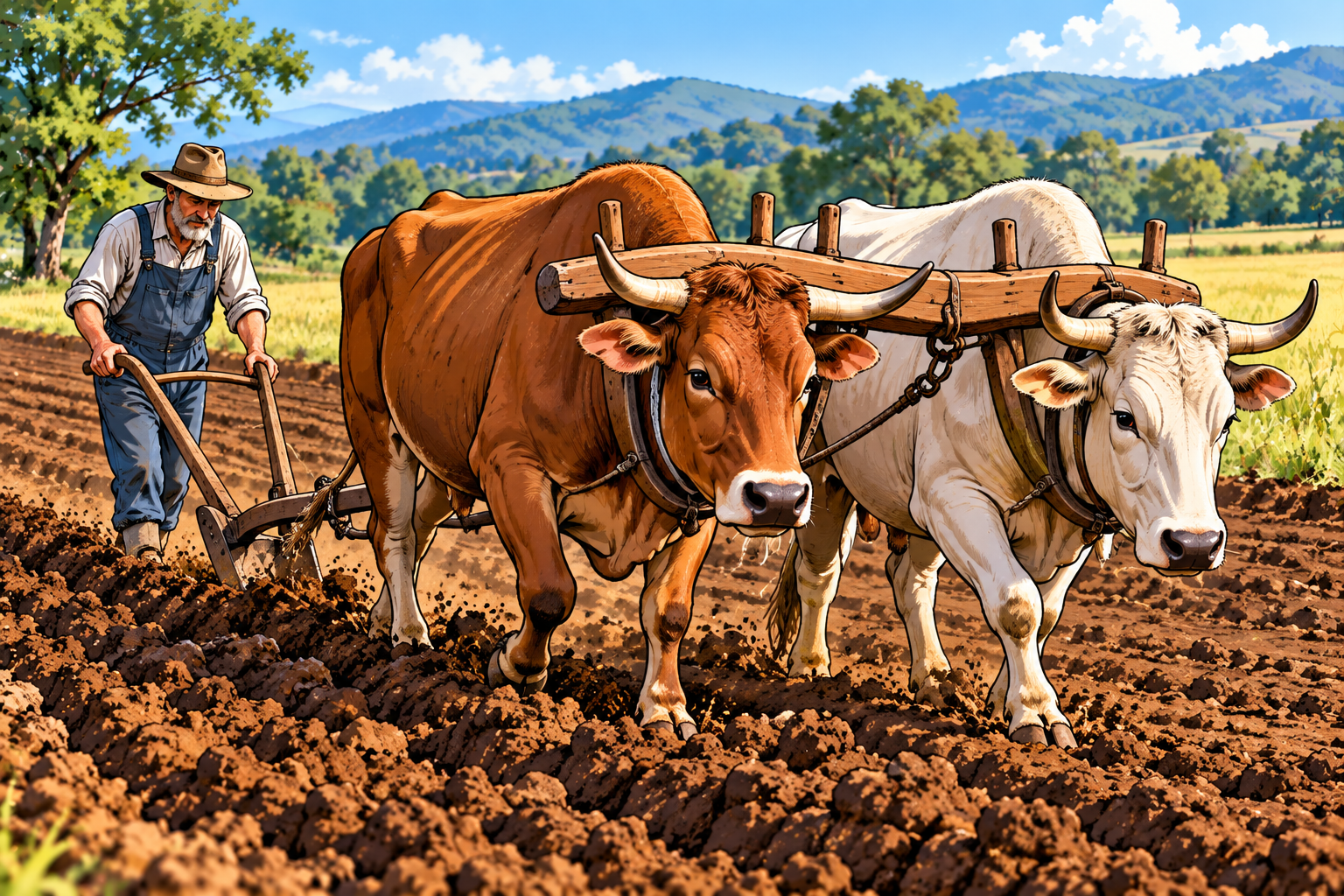
The Four Ways Missionaries Get This Wrong
Avoiding the Four Mistakes That Keep National Churches from Maturity
Every principle can be violated in more than one direction. Most missionaries assume the only danger in raising up an indigenous church is leaving too soon. That danger is real, but it is only one of four ways this process quietly derails. A missionary can fail a national church by leaving too early, staying too long, giving too little, or giving too much. Each one does damage. None of them looks like failure while it is happening.
Leaving Too Soon
A missionary eager to declare victory can walk away from a church still standing on greenhouse legs. The plant looks strong enough on the surface. The root system underneath tells a different story. A national leader placed in charge before he has faced real testing, real conflict, and real failure under supervision will often collapse under the first serious storm that comes after the missionary is gone.
Leaving too soon often stems from good intentions. A missionary wants to prove the work is genuinely indigenous, or to move on to plant the next church, or simply to grow impatient with a process that always takes longer than anyone wants it to. Good motives do not prevent bad timing. The greenhouse door has to open when the plant is ready, not when the gardener is ready to move on.
Staying Too Long
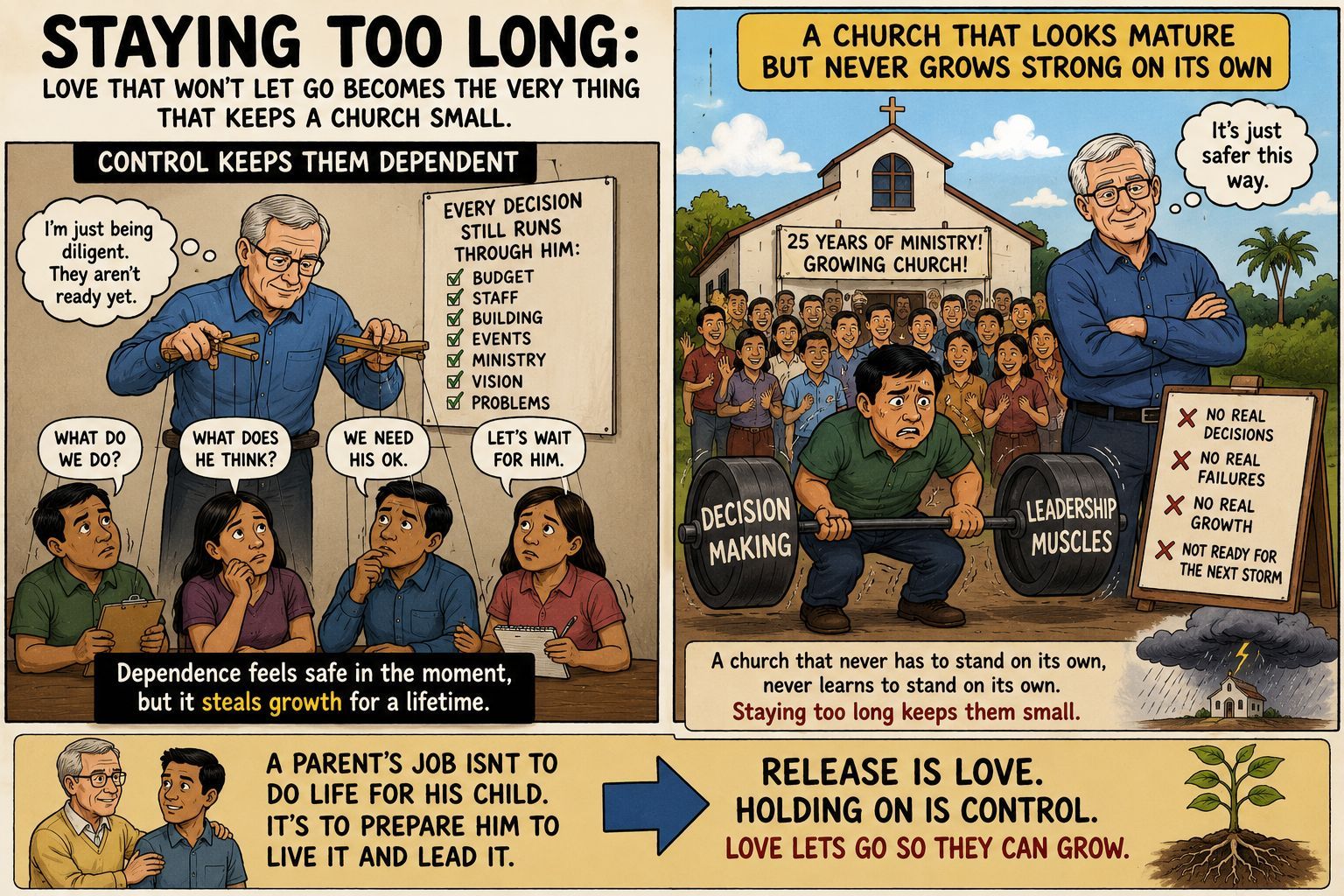
The opposite failure does just as much damage, only slower. A missionary who never fully releases control keeps a national church permanently dependent, whether he intends to or not. Every decision still runs through him. Every major event still needs his approval. The church may look mature from the outside for decades, never actually developing the muscles that maturity requires because someone else has always flexed them for them.
Staying too long often masquerades as diligence or humility. It feels responsible to keep watching over things a little longer. But a parent who never lets a grown child make his own decisions has not stayed loving. He has stayed in the way.
Giving Too Little
Refusing to provide anything, out of fear of creating dependency, can starve a young church before it ever gets the chance to grow strong enough to stand. Some things genuinely require outside help in the early years: training, resources, wisdom earned through years of experience elsewhere. A missionary so committed to avoiding dependency that he withholds even necessary help has confused stinginess with strategy.
The greenhouse principle exists precisely because certain plants cannot survive open ground on day one. Refusing them any shelter at all is not toughness. It is neglect wearing the costume of principle.
Giving Too Much
The final failure runs in the opposite direction and is often the hardest for a generous heart to recognize in itself. A missionary who keeps providing years after a church could provide for itself teaches that church to expect rescue rather than to develop faith. Every bill quietly covered, every gap smoothed over with outside money, trains a congregation to look abroad for provision instead of trusting God to supply through their own sacrifice and giving.
Generosity feels like love in the moment. Sustained past its season, it becomes the very thing that keeps a church from ever discovering what it is capable of when it has no other choice but to trust God for itself.
Finding the Actual Line
All four failures share a common root. Each one substitutes a formula for genuine, ongoing discernment. There is no fixed calendar that tells a missionary the day to leave, the day to stop giving, or the day a leader is finally ready. That answer only comes from staying close enough to the work to actually see it clearly, and honest enough with yourself to admit when your own comfort, fear, or attachment is shaping the decision more than the church's real condition is.
This mirrors something true of the Father's own dealings with every believer. He never manages any of His children by rigid formula. He deals with each one according to what that particular child actually needs in that particular season, giving grace as it is genuinely needed rather than on a fixed schedule. Scripture calls this coming boldly to the throne of grace, to "obtain mercy, and find grace to help in time of need". Not in time of formula. In time of need. A missionary raising up a national church is asked to extend that same kind of attentive, situation-specific grace, rather than applying the same rule to every leader and every season regardless of what is actually in front of him.
A Practical Next Step
Ask which of these four failures you are most tempted toward right now, today, in your own work. Most missionaries lean naturally toward one side or the other, either holding on too tightly out of love, or stepping back too quickly out of eagerness to see the church stand alone. Name your own tendency honestly this week, and ask one trusted friend in the ministry whether they see the same pattern in you.
This closes out our series on the indigenous principle. The goal was never a perfect formula. The goal was a church raised the way a family is raised, with patience, with high expectations, and with a confidence that the same God who began this work in Peru, or wherever you serve, is fully capable of finishing it through the very people He has called there.
Audience of One,
W. Austin Gardner
#FollowedByMercy #AudienceOfOne