Use of Media and Material
Using Every Available Tool to Spread the Gospel Without Replacing the Local Church
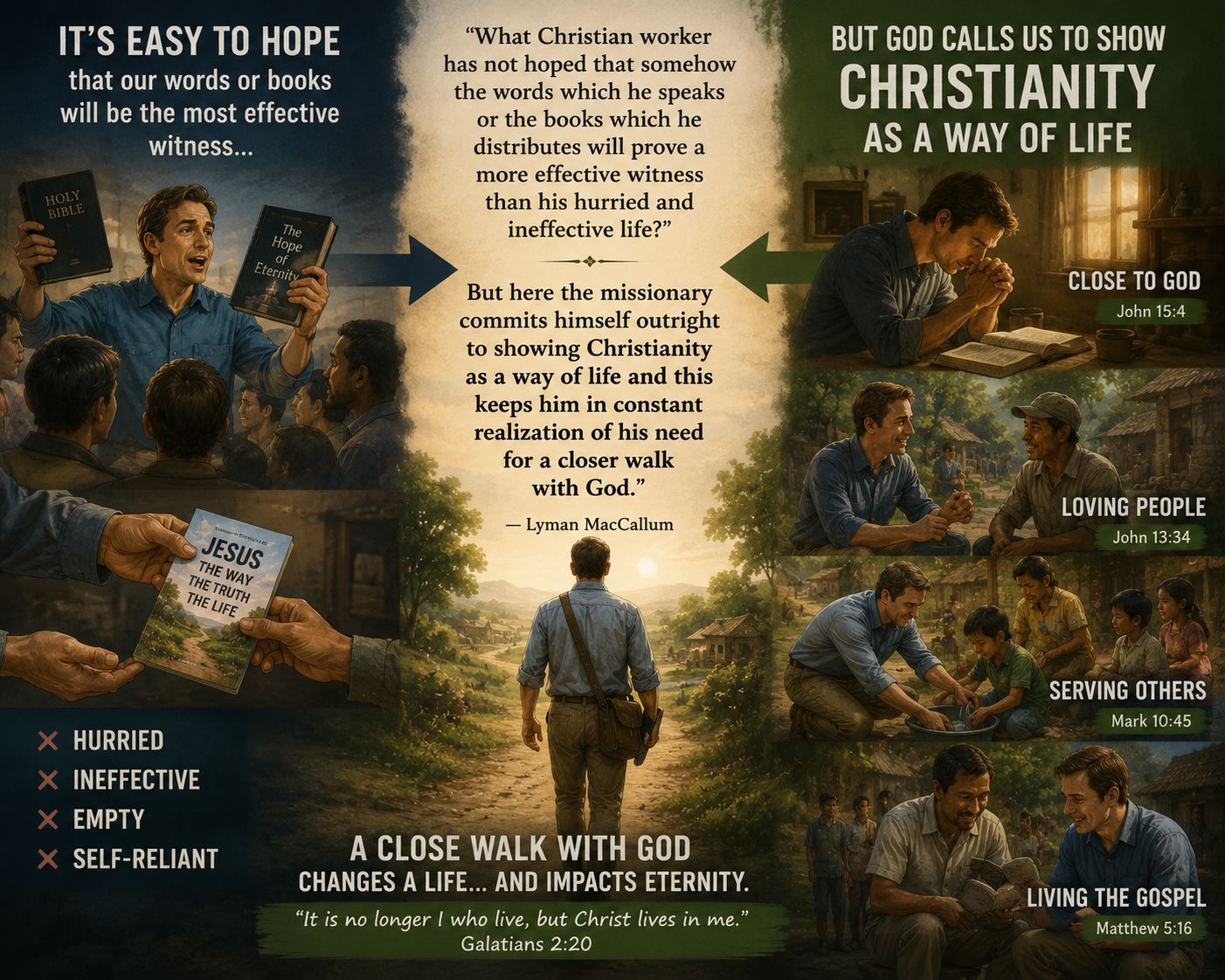
"What Christian worker has not hoped that somehow the words which he speaks or the books which he distributes will prove a more effective witness than his hurried and ineffective life? But here the missionary commits himself outright to showing Christianity as a way of life, and this keeps him in constant realization of his need for a closer walk with God." Lyman MacCallum
Every
missionary who has ever handed out a tract has felt the tension in that quotation. We want the printed page, the broadcast, the recording to carry a weight that our own stumbling lives cannot always carry. And yet, the moment we commit ourselves to media and material as an extension of our ministry, we also commit ourselves to living lives that will not embarrass the message we broadcast. This is not a contradiction. It is a call. The use of media and material in missions is not a shortcut around godly living; it is an amplifier of it, for good or for ill. With that understanding, we turn to a candid look at the problems, priorities, passions, and production that must shape a biblical philosophy of media and material in church planting.
A. Problems
Before anyone builds a media ministry, he ought to count the cost honestly. There are real problems, and men who ignore them end up disillusioned, or worse, they build something that never should have been built.
1. It's not the actual ministry of church planting.
A radio program is not a church. A book is not a congregation. A website does not baptize converts, serve the Lord's Table, or exercise church discipline. Media and material are tools that can prepare the soil, scatter the seed, and even water what has been planted, but they cannot substitute for the local, visible, gathered assembly of believers that Christ established and commissioned. Any missionary who begins to measure his success by download numbers, page views, or program ratings rather than by baptized believers gathered into functioning New Testament churches has lost sight of his actual calling. Media is a means to the end of church planting; it is never the end itself.
2. It is not easily accepted by churches for support.
Sending churches understand the missionary who preaches, starts a Bible study, and plants a church. They can picture it, budget for it, and pray specifically for it. It is a much harder sell to explain that a portion of the missionary's time, and the church's money, will go toward recording equipment, printing costs, website hosting, or studio time. Pastors and mission committees want to know where the converts are, and media work often bears fruit indirectly and sometimes invisibly, in homes and hearts that the missionary will never personally visit. This makes media ministries chronically underfunded, treated as a hobby or a luxury rather than as a legitimate strategy, even though the New Testament itself was propagated in no small part through the circulation of Paul's letters.
3. It can get you lifted up in pride.
There is a peculiar temptation that comes with a microphone, a byline, or a screen. The missionary who writes a widely used curriculum, hosts a television program, or builds a large following online can begin to enjoy the platform more than the purpose. Influence is intoxicating. A man who would never dream of exalting himself in the pulpit of a two-hundred-member church can find himself quietly proud that his voice reaches ten thousand homes. Media multiplies not only your reach but your temptation to self-importance, and any man who steps into this work needs brothers around him who will keep him honest and a private prayer life vigorous enough to keep him small in his own eyes.
4. Excessive cost.
Those who have developed materials and media ministries have largely done so at personal expense. Recording equipment, printing runs, translation costs, software, hosting fees, and the sheer number of unpaid hours involved in writing, editing, recording, and distributing add up quickly, and they add up over years, not months. Because it is difficult to raise dedicated support for this kind of work, as noted above, the men who have pioneered it have frequently funded it out of their own pockets or scraped by on unpredictable gifts. This is not sustainable as a long-term strategy for the whole of our missions effort. If we are serious about media as a priority, we must be equally serious about funding it, rather than expecting individual missionaries to bear the cost alone indefinitely.
5. Too much work.
There is an uncomfortable truth buried in this problem: most of us are not readers, and fewer of us are writers. It would seem that a great many independent Baptists can't read with any depth and definitely can't write with any skill or discipline. Writing a discipleship manual, a Sunday school curriculum, or a college textbook takes months or years of careful, unglamorous labor, and it is far easier to preach a sermon once and move on than to sit down and produce something that will outlive you. And yet history keeps teaching us the same lesson. The men who have had the most lasting influence on the church are, almost without exception, the men who left something behind for others to read and study. Matthew Henry has instructed preachers for three centuries because he wrote a commentary. Jim Elliot continues to challenge young missionaries today, decades after his death, because his journals were preserved and published. The sermon is heard once by a room; the book is read again and again by generations. If we want influence beyond our own lifetime, we cannot avoid the hard, slow work of writing.
B. Priority
Given those problems, why should media and material be a priority at all? Because the potential reach of these tools is unlike anything else available to us.
1. The ability to reach thousands.
A missionary can only be in one place at one time. He can preach to a room, visit a village, disciple a handful of men. But a single radio broadcast, television program, or piece of printed material can be present in thousands of homes simultaneously, morning and night, long after the missionary himself has left the field or gone to be with the Lord. The question every missionary should ask himself is this: how can so few of us be in so many places at once? And what do we leave behind in people's hands after we are gone? A tract, a book, a recorded series of sermons, a discipleship course — these continue to minister long after the missionary's furlough, retirement, or death. Media is, in a very real sense, the missionary who never has to sleep, never has to leave, and never grows old.
2. Our air attack.
In the strategy to reach the world, media functions like air power in a military campaign. Ground troops church planters, pastors, personal evangelists must take and hold territory one household, one soul, at a time. But before the ground troops ever arrive, and while they are working, air power can soften the target, disrupt the enemy's defenses, and reach places the infantry cannot yet go. Media does not replace the ground campaign of personal evangelism and discipleship; it prepares the way for it and supports it. A nation may be closed to missionary visas, but it is rarely closed to satellite signals or internet traffic. Media is how we contest territory before we can ever set foot on it.
3. Combating false doctrine and building confidence.
The media shapes public opinion, whether we participate in it or not. If we are silent, someone else will fill that silence, and it will not necessarily be with truth. The Pentecostal and charismatic movements figured this out decades ago and have used radio, television, and now the internet aggressively to shape public perception of Christianity, often to the detriment of sound doctrine. Meanwhile, we have often ceded that ground by default, assuming that the pulpit alone is sufficient. But media is also how we give confidence to the very people we are training. When a new believer or young pastor hears sound doctrine reinforced on the radio, sees it modeled consistently in printed material, and can return to a recorded sermon for review, his confidence in what he has been taught deepens. Media is not merely offense against error; it is fortification for the truth we have already planted.
4. The information age demands prepared materials.
Radio, television, the internet, and printed material must be deliberately prepared, not left to chance or produced only when convenient. We are living in the information age, whether we like it or not, and the cults and false religions have used every available means to spread their message to the world.
Mormons, Jehovah's Witnesses, and any number of other groups have invested enormous resources into slick, well-produced, widely distributed materials. We are told to be as wise as serpents and as harmless as doves, and wisdom here means recognizing that we now have the ability to reach millions instead of merely dozens or hundreds. The tools that the world and the cults have used to spread deception are the same tools God has placed in our hands to spread the truth. The question is not whether these tools are legitimate. The question is what we intend to do with them.
5. Our own lack of materials is inexcusable.
Here is an uncomfortable question worth sitting with: why do King James fundamentalists so often have to rely on textbooks, curricula, and study materials written by men and organizations they would never allow to step into their own pulpit? We have a great and glaring lack of our own Sunday school material, discipleship material, and college textbooks written from within our own doctrinal convictions. Rather than complain about the materials produced elsewhere, we ought to be producing our own. This is not merely a problem to be solved by a few gifted writers; it is a gap that exposes how little priority we have historically placed on the "too much work" problem named above. Every year we fail to produce sound material of our own is another year we hand the field to others.
6. Closed doors are not closed to signals and pages.
There are nations that will not grant a missionary a visa. There are cultures where open evangelism can bring violence or imprisonment. But those same closed doors are rarely closed to radio and television signals, and increasingly they cannot be closed to the internet at all. A book, a pamphlet, a recording can cross a border that a missionary cannot. Beyond that, there are people within reach of our churches who will never walk through the church doors, not because of persecution, but because of pride, fear, or shame. The person who would be embarrassed to be seen entering a church building may quietly read a tract, listen to a broadcast, or watch a program in the privacy of his own home, and there receive the gospel he would never risk hearing in public. Media reaches where feet cannot go and where pride will not let feet go.
C. Passion
Strategy without passion becomes mere machinery. Behind every argument above must burn a genuine desire.
1. Our desire is to reach the masses with the good news of Jesus Christ, not merely to maintain a comfortable, contained ministry to those already within easy reach.
2. Our desire is to propagate the gospel and the sound doctrine we preach to the entire world, not to keep it carefully guarded within the walls of a single building or the borders of a single field.
3. Our desire is to do so now, in this generation. We cannot be satisfied to let multitudes die without ever once hearing the gospel while we content ourselves with preaching to a few hundred people within convenient driving distance. Every year of delay is measured in souls who will not have another chance.
4. It is our desire to get the gospel to every person by every available means as soon as possible, holding nothing back that God has placed within our reach simply because it is unfamiliar or inconvenient.
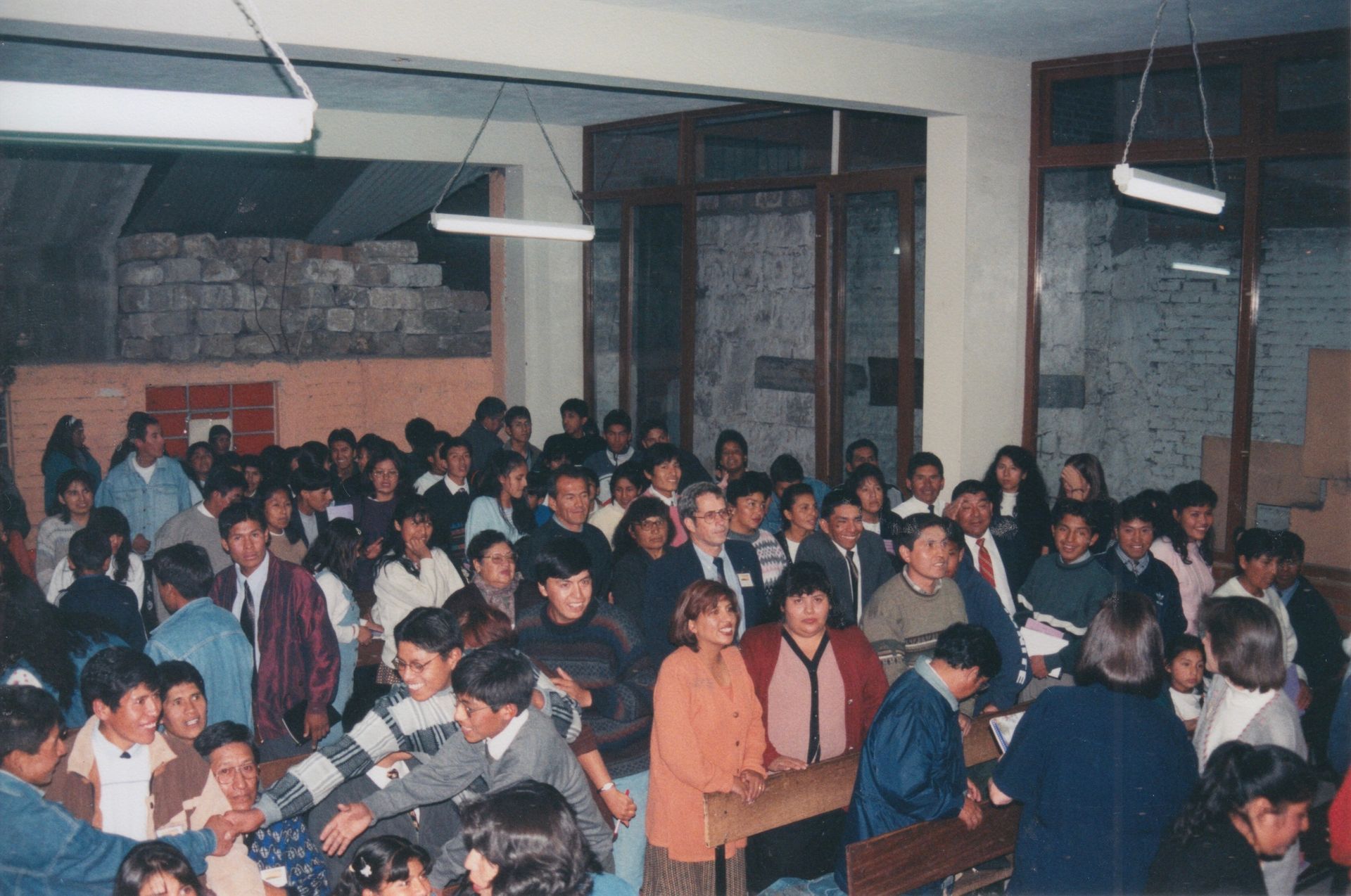
5. Media can be an aid to church planting and discipleship; it is not an either/or proposition. Media and the local church are not competitors for our resources and attention — they are not mutually exclusive endeavors but complementary ones. We have already seen dozens saved and brought into one of our churches through the television ministry in Arequipa, real people, sitting in real pews today, who first heard the gospel through a screen. That is not media replacing the church. That is media feeding the church exactly as it should.
D. Production
Passion and priority must finally result in something made. Here is where conviction becomes concrete.
1. Our God is a God of excellence.
Whatever we produce, whether a fifteen-second radio spot or a full college curriculum, must reflect the excellence of the God we serve. Sloppy audio, careless writing, and cheaply produced material communicate, however unintentionally, that our God and our message are not worth the effort of doing well. We must do the best possible job in preparing our materials, not to compete with the world's polish for its own sake, but because excellence honors the One whose message we carry.
2. An outlet for the called but unpulpited.
Not everyone whom God has gifted and called to full-time service feels called to preach from a pulpit. Media and material ministries give a legitimate, needed outlet for writers, editors, technicians, designers, and producers who would love to give their lives fully to the Lord's work but have no calling to stand behind a sacred desk. We have too often had only one category for full-time service — the preacher — and left no room for the equally valuable callings of the writer, the recorder, the translator, and the producer.
3. A pattern worth reconsidering.
It has too often been our preference, whether stated outright or simply assumed, that our people work secular jobs among worldly people rather than give their lives and talents fully to furthering the kingdom. We esteem the layman who works forty hours a week and tithes faithfully, but we have not always esteemed, encouraged, or funded the layman with a gift for writing, filming, or producing who wants to use those exact talents in direct kingdom service. If God has given a man skill with a camera, a pen, or a recording board, the church should ask how that skill can be devoted to the Lord's work full-time, rather than assuming it belongs only in a secular career, with the kingdom as a side interest.
4. The missionary's constant complaint.
Ask almost any veteran missionary what he lacks most, and materials will be near the top of the list. We have historically been reasonably good at supplying the basics: gospel tracts, portions of Scripture, even whole Bibles in the language of the field. But what about the materials a missionary needs once souls are saved? What does he hand a new convert to disciple him? What does he put in the hands of a national believer whom God is raising up as a leader? What textbook does he use to teach at the Bible college he has started, if he has anything at all beyond his own handwritten notes? The complaint is not new, and it will not disappear on its own. It will only be answered when we treat production of solid, doctrinally sound material as seriously as we treat the sending of the missionary himself.
The use of media and material is not a modern innovation grafted onto biblical missions; it is the modern application of an ancient pattern. Paul wrote letters because he could not be everywhere at once, and those letters have now reached farther and lasted longer than his own voice ever could. We have tools at our disposal that Paul never dreamed of, tools the cults and false teachers have not hesitated to use for error. The problems are real, the cost is real, and the temptation to pride is real. But the priority is undeniable, the passion ought to be burning, and the production, however slow and however hard, must begin — because closed doors, closed borders, and even closed hearts are not closed to the page, the broadcast, and the screen.