More Than Just a Meal
The Sacred Power of Eating Together
When was the last time you really sat down with someone and shared a meal? Not just grabbed fast food on the run, but actually sat, talked, and ate together?
In our culture, meals have become functional. We eat to fuel up and move on. But that's not how God designed it.
In Hebrew culture, meals were never "just meals." They were sacred moments. They represented relationship, covenant, and peace. When you sat at someone's table, you were saying something profound: "I accept you. I receive you. I am at peace with you."
That changes everything.
God Shows Up for Dinner
Let me take you to one of the most shocking moments in Scripture.
Genesis 18:1 "And the LORD appeared unto him in the plains of Mamre: and he sat in the tent door in the heat of the day."
Read that again slowly. The LORD appeared. Not just sent a message. Not just spoke from heaven. He showed up.
And then: this is the part that should make us stop in our tracks: He ate.
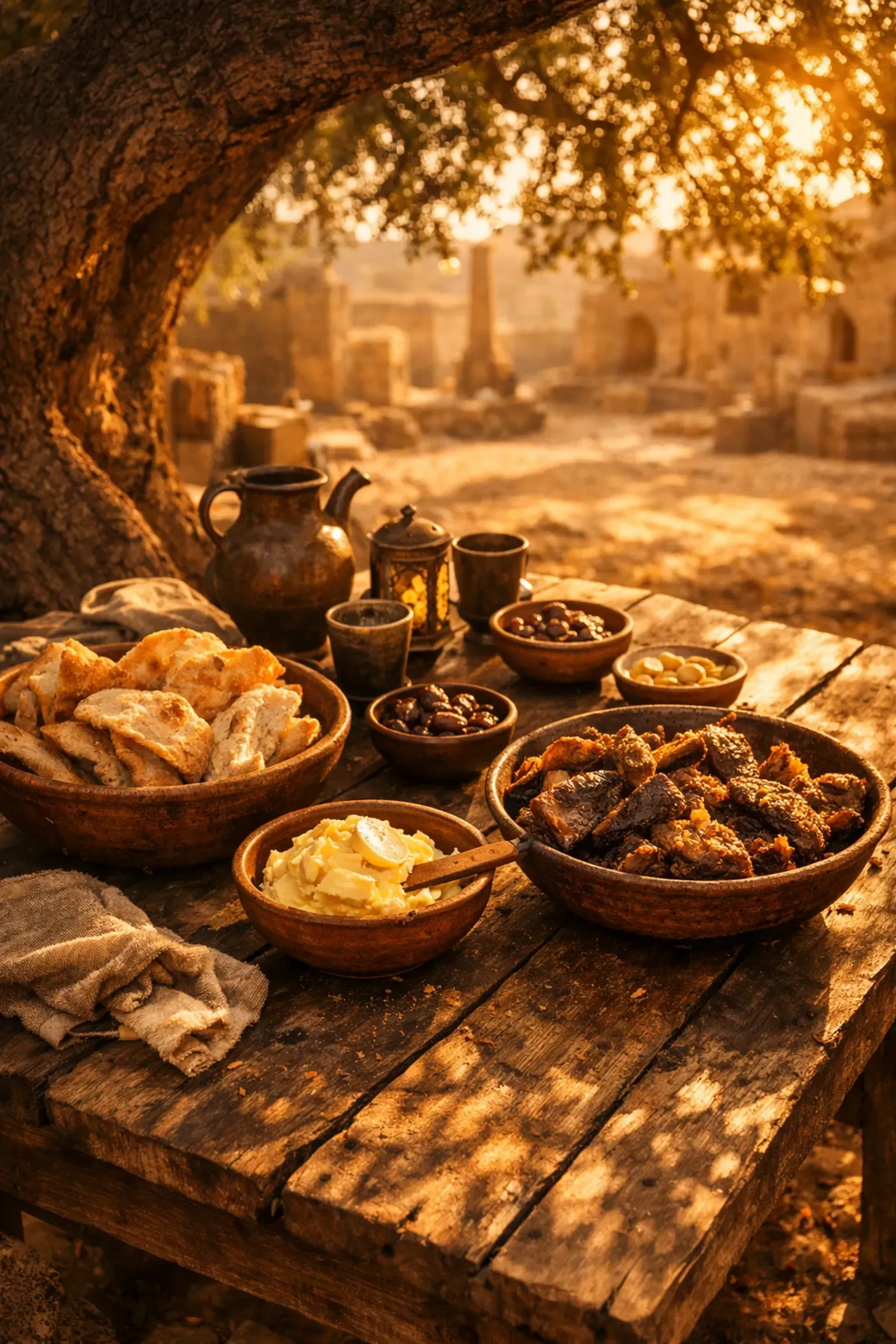
Genesis 18:8 "And he took butter, and milk, and the calf which he had dressed, and set it before them; and he stood by them under the tree, and they did eat."
God ate Abraham's food. The Creator of the universe sat under a tree and accepted bread from human hands. He ate meat prepared by a servant. He drank milk poured into a cup.
This is not weakness. This is condescending grace.
Why Abraham Ran
Notice Abraham's response when these visitors arrived. The text says he "ran to meet them" (Genesis 18:2). This is not casual hospitality. This is covenant language.
Abraham:
- Ran to greet them
- Bowed low to the ground
- Hurried Sarah to prepare bread
- Selected a tender calf (expensive, generous)
- Stood while they ate (service, honor)
In Hebrew culture, this kind of hospitality meant something. It meant: "You are safe here. I am committed to you. We are at peace."
Abraham didn't know he was hosting God Himself. But he treated these strangers as if God was present.
And that matters.
Because God was.
What the Table Really Means
Here's what we miss if we don't understand Hebrew culture: eating together creates shared life.
In Hebrew thought:
- Blood equals life
- Food sustains life
- Eating together equals sharing life
This is why covenant meals were so important in Israel. When you ate with someone, you were binding yourself to them. You were saying, "Your life and my life are now connected."
Exodus 24:11 describes the elders of Israel seeing God, and then it says this stunning thing:
"And upon the nobles of the children of Israel he laid not his hand: also they saw God, and did eat and drink."
They saw God. And they ate.
Seeing God and eating go together.
From Abraham's Table to Jesus' Table
Fast forward through Israel's history. God keeps meeting His people at tables:
- The Passover meal in Egypt
- Peace offerings eaten before the LORD
- Wisdom portrayed as a table in Proverbs 9
Then Jesus comes.
And He eats with everyone. Sinners. Tax collectors. Pharisees. Disciples. He's accused of being "a glutton and a winebibber" (Luke 7:34).
This is Genesis 18 all over again. God sits at the human table. But this time, He doesn't just accept the meal: He becomes the meal.
Luke 22:20 "This cup is the new testament in my blood, which is shed for you."
The Lord's Supper is not a private ritual. It's not just a mental exercise. It's covenant renewal. It's shared life with Christ.
Paul uses the Greek word koinōnia, meaning participation, sharing, or communion. We don't just remember Christ at the table. We partake in Him.
Two Tables, Two Meanings
Let me put Genesis 18 and the Lord's Supper side by side:
In Genesis 18:
- God appears
- God sits at the table
- Bread and meat are served
- Covenant promise is given (Isaac)
- Abraham serves
In the Lord's Supper:
- God incarnate
- God gives Himself
- Bread and cup
- Covenant fulfilled (Christ)
- Christ serves
In both moments, God chooses the table as the place of revelation and promise.
What This Means in Relation to Christ
When we eat at the Lord's table, we're not just "taking communion." We're receiving Christ Himself.
John 6:56 "He that eateth my flesh, and drinketh my blood, dwelleth in me, and I in him."
This is mutual indwelling. He shares His life with you. You live from Him.
The table means:
- God is not distant: He is with you
- This is covenant, not casual relationship
- Grace comes before performance
You don't earn the table. You're invited to it.
What This Means in Relation to Other People
But here's where Scripture gets serious. Communion is not just vertical (you and Jesus). It's also horizontal (you and other believers).
1 Corinthians 10:17 "For we being many are one bread, and one body: for we are all partakers of that one bread."
You cannot partake of one bread and deny the people Christ shares it with.
Paul rebuked the Corinthians for eating the Lord's Supper while ignoring the poor and dividing the body socially (1 Corinthians 11:18-22). His point is devastating:
You cannot eat the bread of unity while living in division.
In relation to others, eating together means:
- We pursue peace
- We refuse contempt
- We recognize dignity in every person at the table
Abraham Didn't Build an Altar First
Here's what moves me most about Genesis 18.
Abraham didn't build an altar before the meal. He didn't perform a ritual. He didn't prove his worthiness.
He set a table.
Before promises were spoken. Before Isaac was named. Before the future was revealed.
God ate with him.
That's the gospel, friend.
God doesn't wait for you to get your act together. He sits down at your table right now. He accepts what you offer: even if it feels like it's not enough. He shares life with you.
And in Christ, He still does.
Tables Are Still Sacred Spaces
So what do we do with this?
First, recognize that your table matters. Hospitality is not just being nice. It's spiritual formation. When you invite someone to your table, you're mirroring God's heart.
Second, treat communion relationally. Don't rush through it. Don't take it casually. Receive Christ together with His people.
Third, look for God in ordinary moments. He met Abraham under a tree. With bread. With simple food. He still meets us in ordinary moments today.
You don't have to manufacture some special experience. Just slow down. Share a meal. Be present. God shows up there.
If you're wrestling with what it means to be loved by God exactly as you are, the table is where that becomes real. Not in your head. Not in theory. At the table.
One Sentence to Remember
At the table, God gives Himself to us, and then teaches us to give ourselves to one another.
That's Genesis 18. That's the Lord's Supper. That's the Christian life.
Frequently Asked Questions
Why does it matter that God actually ate with Abraham?
Because it shows that God doesn't just tolerate humanity: He enters into our rhythm, our space, our ordinary life. Eating together is the most human thing we do, and God chose to do it with us. That's not weakness; that's love made visible.
How is the Lord's Supper different from just remembering Jesus?
The Lord's Supper is participation, not just memory. Paul uses the word koinōnia: which means sharing, fellowship, communion. We don't just think about Jesus at the table. We receive Him. We partake in His life. It's covenant renewal every time.
What if I don't feel worthy to take communion?
Friend, none of us are worthy. That's the whole point. The table is not a reward for holiness: it's a gift that creates holiness. Jesus invited Judas to the table. He invites you too. Come because you're invited, not because you're perfect.
This post is part of an ongoing conversation about God's grace and how He meets us right where we are. For more on resting in God's unconditional love, listen to the Followed by Mercy podcast or visit Alignment Ministries.
#LordsSupper #BiblicalHospitality #CovenantLove #Genesis18 #SacredMeals