The Shadow of the Roof
Why Lot Defended His Guests at All Costs
Let me be honest with you: Genesis 19 is one of those passages that makes you want to close your Bible and walk away.
Lot offering his daughters to a violent mob?
It's horrifying. It's wrong by any measure. And if you've ever read it and thought, "What was he thinking?" you're asking the right question.
But here's what most of us miss: Lot wasn't thinking like a 21st-century father. He was thinking like an ancient Near Eastern host. And in his world, that distinction mattered more than we can imagine.
This isn't about excusing what Lot did. It's about understanding why the stakes of hospitality were so high that a man would even consider such a thing.
The Sacred Duty of the Roof
In the ancient world, hospitality wasn't just polite. It was a binding covenant.
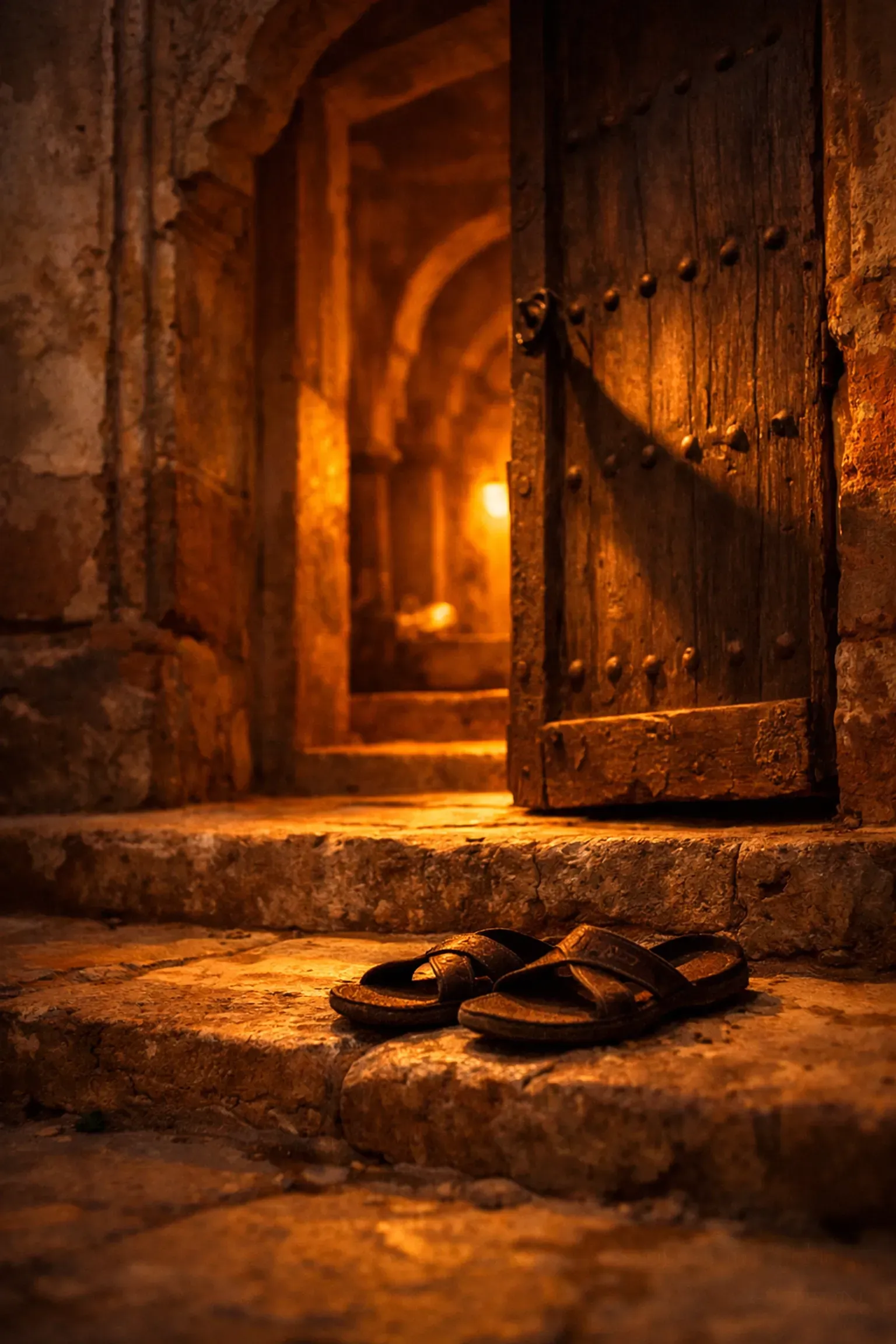
When a stranger entered your home, they came under what was called the shadow of your roof. That phrase wasn't poetic. It was legal. It was moral. It was sacred.
Once someone crossed your threshold, you became their protector, at any cost.
The Bedouin culture that shaped both Abraham and Lot had a saying: "You will die in front of the one you're protecting."
Not might die. Will die.
Your guest's safety became more important than your own life. More important than your family's safety. More important than anything.
Genesis 19:8 captures this mindset when Lot says: "Behold now, I have two daughters which have not known man; let me, I pray you, bring them out unto you, and do ye to them as is good in your eyes: only unto these men do nothing; for therefore came they under the shadow of my roof."
That last phrase, "under the shadow of my roof," was the hinge.
It meant: these men are untouchable now. They are mine to defend. I cannot abandon them without abandoning everything I believe about honor, covenant, and God.
The Shocking Choice
Let's not soften this: Lot's offer was appalling.
By our standards, and by God's heart for His daughters, it was an unthinkable betrayal.
But within Lot's cultural framework, he was choosing what he believed to be the lesser of two evils. He was trying to preserve the sacred law of guest protection while offering the mob an alternative.
It wasn't right. But it reveals how extreme the obligation was.
The men of Sodom were demanding access to his guests. They were threatening to break down the door. They were violating every code of decency and peace.
And Lot stepped outside, alone, to face them.
Think about that. He didn't send his daughters first. He went out himself and put his body between the mob and the strangers he'd invited into his home.
Genesis 19:6 says: "And Lot went out at the door unto them, and shut the door after him."
He closed the door to protect his guests. Then he stood in front of it.
That's the part we often miss. Lot risked his own life first. His offer of his daughters came in desperation, trying to satisfy a violent crowd while still honoring his vow of protection.
It was wrong. But it shows how sacred the duty was.
Sodom's Total Violation
Here's the deeper horror: Lot was the only one in Sodom who cared about this.
No one else offered shelter. No one else stepped outside to defend strangers. No one else risked anything.
The rest of the city saw the visitors as targets, not guests.
That's what made Sodom so wicked. It wasn't just sexual sin. It wasn't just violence. It was the complete abandonment of covenant, peace, and human dignity.
Ezekiel 16:49 tells us: "Behold, this was the iniquity of thy sister Sodom, pride, fulness of bread, and abundance of idleness was in her and in her daughters, neither did she strengthen the hand of the poor and needy."
Sodom had everything. And they used it to crush the vulnerable.
The men at Lot's door weren't just violent. They were violating the most sacred duty in their culture: protecting the guest.
And that's why judgment came.
God didn't destroy Sodom because they were different from other cities. He destroyed them because they had become totally corrupt: so corrupt that hospitality itself was dead.
What Lot Learned from Abraham
Lot didn't invent this extreme view of hospitality. He learned it from Abraham.
Go back one chapter. Genesis 18 shows us Abraham running to meet three strangers, bowing low, preparing a feast, and standing while they ate.
Abraham treated unknown visitors like royalty.
And Lot was there. He saw it. He absorbed it.
When the two angels arrived in Sodom, Genesis 19:1 says: "And there came two angels to Sodom at even; and Lot sat in the gate of Sodom: and Lot seeing them rose up to meet them; and he bowed himself with his face toward the ground."
That's Abraham's posture. That's Abraham's urgency.
Lot had learned that guests were sacred. That strangers could be messengers of God. That the table was a place of covenant and protection.
The tragedy is that Lot tried to live out Abraham's values in a city that had no values left.
He was righteous in a place that hated righteousness. And it almost destroyed him.
What This Means for Us
So what do we do with this story?
First, we acknowledge that Lot's choice was wrong. We don't defend it. We don't explain it away. God's heart for daughters- for all vulnerable people- matters deeply.
But second, we recognize what the story reveals: hospitality is a sacred act.
In a world where refugees are turned away, where strangers are feared, where the vulnerable are ignored, this ancient duty still matters.
You don't have to offer what Lot offered. But you can offer what Abraham offered: a table, a welcome, a place of safety.
The New Testament picks up this thread.
Hebrews 13:2 says: "Be not forgetful to entertain strangers: for thereby some have entertained angels unawares."
That's not poetry. That's Genesis 18 and 19 echoing forward.
When you open your home, you're not just being nice. You're participating in something holy. You're creating space where God can show up.
And you're declaring that people matter more than comfort, safety, or reputation.
Lot got some things tragically wrong. But he got one thing right: he refused to abandon his guests.
Even in Sodom, he held onto that one thread of covenant faithfulness.
And because of that thread, and because of Abraham's intercession, God rescued him before judgment fell.
FAQ
Why didn't God stop Lot from offering his daughters?
Scripture records what happened, but it doesn't endorse it. God didn't approve of Lot's choice: the angels intervened before anyone was harmed (Genesis 19:10-11). The text shows us human failure within a larger story of God's rescue and justice. Lot's desperation reveals how broken Sodom had become, not how God views daughters.
Does this passage mean hospitality is more important than family?
No. It means hospitality was elevated to an extreme in ancient culture: sometimes to the point of tragic choices. Jesus reframes this entirely: He protects both the guest and the vulnerable. We're called to welcome strangers (Matthew 25:35), but never at the cost of abusing or sacrificing the powerless. God's heart includes both.
Why is Lot called "righteous" in 2 Peter 2:7 if he made such a terrible choice?
Righteousness in Scripture isn't sinless perfection: it's covenant faithfulness and alignment with God's heart. Lot was "righteous" because he opposed Sodom's evil, welcomed the angels, and held onto the values Abraham taught him. But he was also flawed, compromised, and living in a toxic environment. That's the tension of the text: even broken people can be used in God's rescue plan.
If you're wrestling with hard passages like this, you're not alone. I've spent 50+ years in ministry learning that the Bible doesn't hide human failure: it shows us God's grace in the middle of it. You can read more about how God's unconditional love meets us in our mess at The Big Leap of Faith: Believing God Loves You Exactly as You Are.
And if you want to go deeper into Scripture with a grace-centered lens, check out the Followed by Mercy podcast, where we unpack hard stories with honest conversation.
#BiblicalHospitality #Genesis19 #LotAndTheAngels #AncientCulture #ScriptureExplained